


Walk into any jewellery shop in India today, and you will spot lab grown diamonds in the display. Many shoppers pause there and ask one thing: where do these diamonds actually come from? The answer starts with a tiny seed, a sealed machine, and a few patient weeks. This guide follows that path, all the way to a finished ring or pendant.
Many buyers first wonder how a lab grown diamond vs natural diamond choice changes the final look. Others want honest numbers on lab diamonds price before they step into a shop. Some simply want to know how the quality of diamond is judged. We answer each question in plain, friendly words.
These tips follow ideas shared by Earthly Jewels, a brand that focuses on solitaire rings. We begin with what these diamonds are and how they grow. Then we cover prices, quality, care, and smart buying habits. Use the tables and checklists to plan your own purchase.
What Is a Lab Grown Diamond?
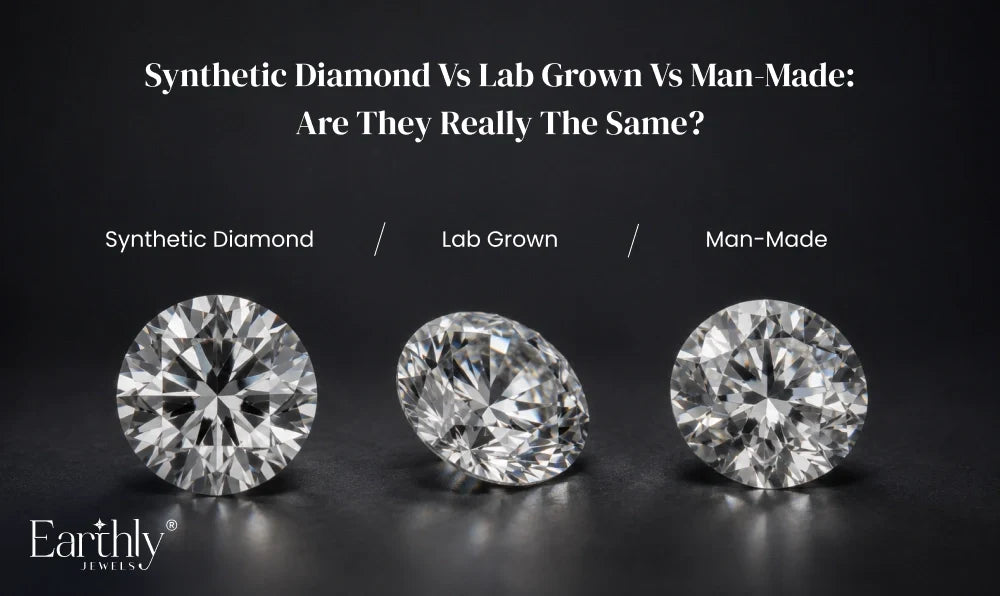
A lab grown diamond is a real diamond that grows inside a lab. It is pure carbon, just like a mined diamond. Its hardness, shine, and makeup match those of a mined diamond. You may also hear the names lab created diamonds, man made diamonds, or engineered diamonds.
Real Diamonds, Not Look-Alikes
Some people mix up lab diamonds with cubic zirconia or moissanite. Those two are other materials with their own structure. A lab grown diamond has the same crystal structure as a mined one. That is why grading labs report both as diamonds.
- Lab grown diamond: Pure carbon in the same crystal structure as a mined diamond.
- Cubic zirconia: A different material with a lower hardness.
- Moissanite: A different material with its own sparkle pattern.
How Lab Diamonds Are Created
Every lab diamond begins with a seed. The seed is a thin slice of diamond that acts as a base. Carbon atoms attach to it and build the crystal layer by layer. Two main methods do this job today.
HPHT Growth Explained
HPHT stands for high pressure, high temperature. The method copies the heat and pressure found deep inside the Earth. A seed sits in a press with a carbon source and metal. Over time, a rough diamond forms around the seed.
CVD Growth Explained
CVD stands for chemical vapour deposition. A seed sits in a sealed chamber filled with carbon-rich gas. Heat breaks the gas apart, and carbon settles on the seed in thin layers. Many diamonds sold in India today use this method.
From Rough Crystal to Diamond Jewellery
A new crystal looks rough and dull. Skilled cutters shape it into a round, oval, or pear form. Polishers then add flat faces that bounce light to your eye. After that, the diamond is ready for grading and setting.
Setting Diamonds into Lab Grown Diamond Jewellery
Jewellers set the diamond in gold or platinum. A good setting holds the diamond securely and lets light enter. This final step turns a polished diamond into lab grown diamond jewellery. Popular designs include the following:
- Solitaire rings: One diamond marks engagements, weddings, and anniversaries.
- Stud earrings: A simple pair suits everyday wear.
- Pendants: A single diamond layers easily with other chains.
- Bracelets: A line of diamonds adds a light, elegant touch.
- Mangalsutras: Small diamonds bring a modern feel to a traditional piece.
Lab Grown Diamond vs Natural Diamond: Key Differences
This comparison starts with the origin. One diamond grows in a machine over a few weeks. The other formed underground over a very long time.Both options can work well, depending on your needs and preferences.
Appearance and Testing
To the eye, both diamonds look alike, even under a loupe. Grading laboratories evaluate their quality, although report formats and terminology can vary by laboratory. Special tools can spot growth marks that buyers cannot see. These marks do not change how a diamond looks or wears.
| Feature | Lab grown diamond | Natural diamond |
| Origin | Grown in a lab | Formed deep in the Earth |
| Material | Pure carbon | Pure carbon |
| Look | Same sparkle and hardness | Same sparkle and hardness |
| Typical cost | Usually lower | Usually higher |
| Grading report | States lab origin | States natural origin |
| Resale market | Still small | More established |
Which One Suits You?
Neither choice is wrong. Your own priorities decide the best fit. Think about budget, size, origin, and resale. These pointers can help you decide.
- Lab grown fits if: You want a larger diamond for your budget.
- Lab grown fits if: You like a clear, traceable origin.
- Natural fits if: You value the idea of a diamond formed over millions of years.
- Natural fits if: A stronger resale market matters most to you.
Why Lab Grown Diamonds Are a Jewellery Revolution
India sits at the centre of this change. GJEPC data, reported by IDEX Online, shows a milestone. In the year to March 2026, India's polished lab grown exports passed natural exports by carat volume. The shift shows how fast these diamonds moved from niche to mainstream.
- Value: Sellers often quote prices roughly 30% to 80% below similar mined diamonds.
- Eco impact: Growing a diamond avoids open-pit mining, though the power source still matters.
- Origin: Each diamond is made in a lab, so its source is easy to trace.
- Choice: More sizes, shapes, and styles now reach everyday budgets.
- Design: Savings can fund a larger diamond or a more detailed setting.
- Custom pieces: Many brands now make personal designs with lab grown diamonds.
Myths That Need Clearing Up
A few old beliefs still confuse buyers. Clearing them up helps you shop with confidence. Each one has a simple answer. Here are four common examples:
- Myth: They are fake diamonds.
- Fact: They share the same structure as mined diamonds.
- Myth: They match cubic zirconia.
- Fact: Cubic zirconia is a different material.
- Myth: They sparkle less.
- Fact: Cut quality, not origin, drives sparkle.
- Myth: They suit only fashion pieces.
- Fact: Many couples choose them for engagement rings.
Lab Grown Diamond Price in India: A Complete Cost Guide
The lab grown diamonds price in India depends on size, shape, cut, colour, clarity, and report. Brands price differently, so quotes can vary a lot. Lab diamonds price levels have also shifted quickly as production grew. Always check the date of any price you read.
Lab Diamonds Price in Rupees
Seller guides published in 2026 give a rough picture in rupees. Natural diamond prices sit beside them for comparison. Treat every figure as approximate, not a fixed rate. Confirm the final quote, including taxes, with your jeweller.
| Item | Approximate quoted range |
| 0.5 carat lab grown diamond | Approx. ₹15,000 to ₹35,000 |
| 1 carat lab grown diamond | Approx. ₹30,000 to ₹1,20,000 |
| 1 carat natural diamond, similar grade | Approx. ₹1.5 lakh to ₹4 lakh |
| 1 carat lab grown solitaire ring | Approx. ₹80,000 to ₹1,20,000 |
How to Check the Quality of Diamond
Quality rests on four traits that graders check. These are cut, colour, clarity, and carat weight. Cut affects sparkle the most, so give it priority. A balanced mix often beats chasing one top grade.
Your Buying Checklist
Smart shopping starts with a little research. A simple checklist helps you focus on what matters. Use it for rings, studs, and pendants. Review each point before making a purchase.
- Ask for a grading report from a reputable laboratory for each diamond.
- Read the brand's reviews, social pages, and policies.
- Compare five to eight sellers for similar designs.
- Check the cut grade first, then colour and clarity.
- Ask for a full price breakup, including metal, making charges, and GST.
- Confirm return, repair, and resizing terms in writing.
- Choose lab grown diamond jewellery for daily joy rather than investment.
Resale Value of Lab Created Diamonds
Resale values for these diamonds are generally lower today. The resale market is also still small. Buy for love and daily wear rather than profit. A fair price at purchase matters more than any later sale.
Earthly Jewels: Lab Grown Diamond Jewellery
Earthly Jewels is a jewellery brand built around lab grown diamonds. It focuses on solitaire rings, the classic symbol of engagement and love. The brand says its mission is to make diamond ownership possible for more Indians. It describes its designs as international in style and sensibly priced.
What You Can Find at Earthly Jewels
The collection goes well beyond engagement rings. You can browse by category to match your occasion. Each piece pairs real diamonds with a thoughtful design. These are the main categories on its website:
- Rings: Solitaire and engagement rings for life's biggest milestones.
- Earrings: Diamond studs and other styles for daily wear.
- Necklaces and pendants: Light pieces that layer well.
- Mangalsutras: Diamond designs for traditional occasions.
- Bracelets: Delicate lines of diamonds for the wrist.
- Men's rings: Bold ring styles made for him.
Key Takeaways
- Origin: Lab diamonds are real diamonds grown in labs.
- Structure: They share the same carbon crystal structure as mined diamonds.
- Methods: HPHT and CVD are the two main ways to grow them.
- Cutting: Skilled cutting turns a rough crystal into a sparkling diamond.
- Comparison: Origin and cost differ between the two, while appearance stays the same.
- Pricing: Approximate quotes in rupees vary widely, so compare several sellers before choosing.
- Quality: Cut, colour, clarity, and carat weight shape every grading report.
- Reports: Request a grading report from a reputable lab for each diamond.
- Resale: Treat purchases as lasting keepsakes rather than investments.
- Design: Savings can fund larger sizes or more detailed settings.
Conclusion
Lab grown diamonds bring the beauty of real diamonds with a clearly documented origin. From their creation in a laboratory to the finished jewellery, each step adds to their story. Check the grading report, compare prices in rupees, and look for a design that matches your style. The best choice is one that feels special today and brings you joy whenever you wear it.
Looking for a little inspiration? Explore Earthly Jewels for lab grown diamond jewellery and solitaire rings suited to proposals, weddings, and everyday wear. Visit a store or book a video consultation to discuss your questions and preferences. Take your time, explore different designs, and choose a piece that feels truly yours.
Frequently Asked Questions
Are lab grown diamonds considered real diamonds?
Yes, lab grown diamonds have the same carbon crystal structure as mined diamonds. Their grading reports state that they were created in a laboratory. The main distinction is their origin rather than their chemical composition.
What is the price of lab grown diamonds in India?
Prices vary according to carat weight, cut, colour, clarity, and seller. In 2026, a one-carat lab grown diamond may cost between ₹30,000 and ₹1,20,000. Compare prices from different sellers before deciding which option suits your budget.
How can I check diamond quality before buying?
Ask the seller for a grading report from a recognised gemmological laboratory. Examine the cut, colour, clarity, and carat weight before making your choice. Check that the diamond matches the details listed in its report.
Can a diamond tester identify lab grown diamonds?
Basic diamond testers generally cannot distinguish lab grown diamonds from mined diamonds. Both types share similar physical properties, which can produce comparable test results. Specialised gemmological equipment can help determine a diamond’s origin.
Are lab grown diamonds a good choice for engagement rings?
Lab grown diamonds can be suitable for engagement rings worn regularly. Their hardness helps resist everyday scratches, although strong impacts can still cause damage. Choose a secure setting that suits your lifestyle and daily routine.
Can I resell a lab grown diamond later?
Lab grown diamonds may resell for less than their original purchase price. The amount depends on market demand, diamond characteristics, and the buyer’s offer. Consider your budget carefully rather than purchasing a diamond solely for future resale.



Share:
What Is A CVD Diamond? Everything Indian Buyers Ask
Lab Grown Diamond Jewellery Gift Ideas for Every Special Occasion