


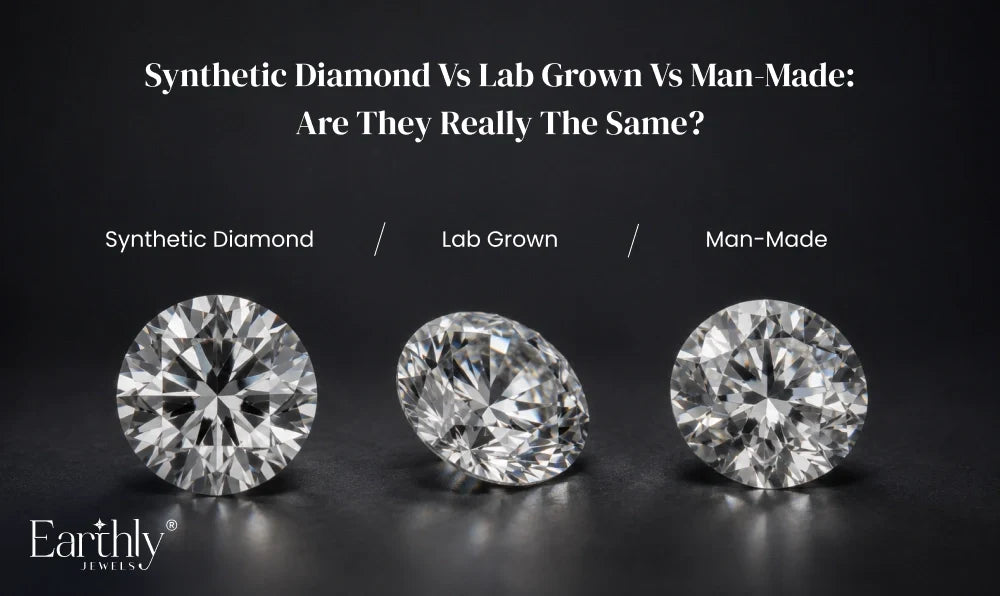
A synthetic diamond sounds like a fake to many shoppers. That worry is understandable, yet the word only describes how a diamond began. Lab grown diamonds and man made are two more labels pointing at the same idea as a synthetic diamond. This guide explains where the three names differ and where they overlap.
Jewellery shops, labs, and governments use these words in slightly different ways. That mix makes price tags, certificates, and product pages harder to compare. You will see how each name is used and why sellers pick one over another. You will also learn which words signal a real diamond and which signal something else.
Price comes next, so we cover the synthetic diamond price and the man made diamonds price. We also look at man made diamond jewellery, from daily wear to special days. Along the way, you get three practical checks that work in any shop. By the end, you will know whether these names truly mean the same thing.
What Do These Three Names Mean?
Diamond names carry history, rules, and a little marketing. Each term answers a slightly different question about the diamond. Some describe origin, some describe method, and some describe the seller's style. Reading them one by one clears up most of the confusion.
Synthetic Diamond, the Scientific Term
Scientists call anything made by people, rather than found in nature, synthetic. A synthetic diamonds are made of carbon in the same crystal pattern as a mined one. People first made diamonds in labs for industry in the 1950s, so the word has a long history. In science, it is a neutral term and carries no hint of low quality.
Lab Grown Diamond, the Shop Term
Lab grown is the term most shops use. It is clear and easy to grasp. It tells you the diamond grew in a lab using CVD or HPHT. A lab grown diamond has the same chemistry as a mined one. It also has the same crystal structure. GIA has evaluated laboratory-grown diamonds for years. Now they use a dedicated Quality Assessment for eligible colourless to near-colourless stones.
Man Made, the Plain Term
Man made is the simplest label of the three, and shoppers grasp it instantly. It says people, not geology, created the diamond. Some writers like it because it avoids technical talk. In short, it describes the same material as the other two names.
Are They Really the Same Thing?
For the material itself, the answer is yes. For the wording, the answer is no. All three names point to a diamond made by people. These are not dug from the earth. The table shows how each term appears in daily life.
| Term | Where you see it | What it tells you | Real diamond? |
| Synthetic diamond | Science, labs, some countries | Made by people | Yes |
| Lab grown diamond | Shops, websites, grading reports | Grown in a lab | Yes |
| Man made diamond | Headlines, casual talk | Created by people | Yes |
| Cubic zirconia or moissanite | Budget jewellery | A different material that only looks similar | No |
Simulants cause the real confusion, because people make those too. Cubic zirconia and moissanite are different materials, not diamonds of any kind. The word synthetic can be used loosely for them, which blurs the line with a true synthetic diamond. Always ask whether a piece holds a diamond or a simulant before comparing anything.
Why the Labels Keep Changing
Rules around these words differ by country and have shifted over time. That is why one website says synthetic while another says lab grown. A few key moments explain most of the change. Rules can change again, so check local guidance before you judge a listing.
Key Moments in the Naming Debate
- 2018: The US Federal Trade Commission stopped listing synthetic as a suggested term for these diamonds.
- Also 2018: It kept the word allowed but warned against using it to suggest a diamond is not real.
- 2019: GIA began calling its reports Laboratory-Grown Diamond Reports.
- France: The country has required the word synthetic for man made diamonds.
Synthetic Diamond Price and Man Made Diamonds Price
Price is where the label matters least and the details matter most. A synthetic diamond price follows the same factors as any other diamond price. The name on the tag, whether synthetic or lab grown, does not set the cost. Instead, the factors listed below decide the final figure you pay.
What Moves a Synthetic Diamond Price
- Carat weight: Bigger diamonds cost more, and the cost per carat usually rises with size.
- Cut quality: A well cut diamond returns more light and can cost more.
- Colour and clarity: Higher grades usually cost more, though small gaps are hard to see.
- Setting and metal: Gold weight, side diamonds, and design work all add to the total.
Reading a Man Made Diamonds Price Tag
A man made diamonds price may cover a loose diamond or a finished jewel. Check which one the number covers before comparing two shops. On the Earthly Jewels solitaire collection, prices start at approximately ₹17,900. A 1 ct round solitaire ring there starts at approximately ₹48,000.
Rings, Bands and Everyday Pieces
Most buyers meet these terms on a ring page, not in a science book. A synthetic diamond jewellery page may call one design lab grown or man made. Design, comfort, and workmanship should guide your choice more than the word does. These examples show how that plays out.
Man Made Diamond Rings for Daily Wear
Man made diamond rings suit daily wear because the diamond has the same hardness as a mined one. Low settings with strong metal protect the diamond from knocks. Solitaires stay popular because a single diamond keeps the look clean. Choose a size and band width that feel comfortable all day.
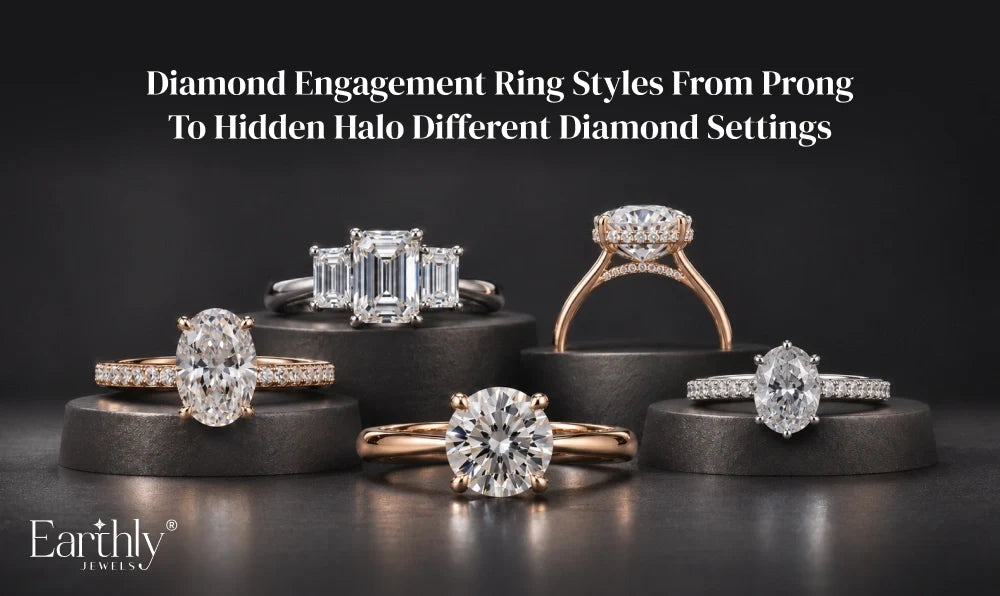
Settings That Hold Up Well
- Bezel: A metal rim wraps the diamond and shields its edges.
- Four prong: Four slim prongs show more of the diamond and let in light.
- Hidden halo: Small diamonds under the centre add sparkle without changing the top view.
Synthetic Diamond Rings and the Synthetic Diamond Band
Synthetic diamond rings follow the same styles as any other diamond ring. A synthetic diamond band can carry a row of small diamonds around the finger. Eternity styles look striking, while thin bands stack well with other rings. Match the band metal with your other jewellery so the look feels connected.
Synthetic Diamond Jewellery Beyond Rings
Synthetic diamond jewellery also includes earrings, pendants, bracelets, and mangalsutras. Studs and pendants make easy first buys because they suit almost any outfit. Mangalsutras blend tradition with a modern diamond look. For significant centre diamonds, ask what grading or quality documentation is provided. For smaller stones, check the documented product specifications.
Which Word Should You Trust When Shopping?
Honest sellers use clear words, whichever name they prefer. A synthetic diamond listing and a lab grown listing can describe the very same piece. What matters is that the page never hides how the diamond was made. These signs help you spot clear, honest wording.
- Plain disclosure: The page labels its man made diamond jewellery clearly near the diamond details.
- No mixed claims: A listing never sells simulant pieces as man made diamond jewellery.
- Matching paperwork: The report wording agrees with the product page.
- Open answers: The seller explains the synthetic diamond price clearly when you ask about origin.
Collections Worth Exploring
Names matter less once you see real designs side by side. Each collection below shows the same kind of diamond in a different style. Browse them with the wording checks in this guide in mind. Pick the style of jewellery that fits your day.
- Solitaire Rings: One diamond, clean lines, and many shapes to choose from.
- LUXE Solitaires: Statement solitaires made for milestone moments.
- Eternity Rings: Rows of diamonds that circle the finger for a stacked look.
- Earrings: Studs, hoops, and drops that lift everyday outfits.
- Pendants: Simple diamond pendants that sit well with most necklines.
- Mangalsutras: Traditional designs with a modern diamond touch.
- Bracelets: Delicate wrist pieces for work, parties, and gifting.
- Men's Rings: Bold diamond rings made for men.
- First Shine: Starter pieces listed under approximately ₹25,000.
Three Smart Checks Before You Buy
Proof matters more than the name, so build your decision on three checks. These checks work in any shop, online or in person. They also protect you from vague wording and mixed-up terms. Begin by checking the documents, then inspect the diamond and the seller.
- Ask for a grading report: An independent report should describe the diamond as lab grown.
- Read the wording: A product page should say plainly that people made the diamond.
- Compare like with like: Match carat, shape, colour, clarity, and metal before comparing any synthetic diamond jewellery.
Key Takeaways
- Meaning: A synthetic diamond, a lab grown diamond, and a man made diamond are one material.
- Labels: Lab grown is the common shop term, while synthetic is the scientific one.
- Simulants: Cubic zirconia and moissanite look similar but are not diamonds.
- Rules: Naming rules differ by country, so check how a seller describes each piece.
- Cost: The synthetic diamond price depends on carat, cut, colour, clarity, and setting.
- Budget: Compare the man made diamonds price only after matching every detail.
- Rings: Man made diamond rings and synthetic diamond rings suit daily wear with sturdy settings.
- Bands: A synthetic diamond band works well alone or stacked with other rings.
- Jewellery: Synthetic diamond jewellery and man made diamond jewellery should come with a clear grading report.
- Testing: Basic home testers cannot reliably tell a synthetic diamond from a mined one.
Conclusion
A synthetic diamond and a lab grown diamond are the same material under different names. Man made simply says people created it, while simulants are a different product. Price, design, and paperwork should guide you more than the label does. Once you know that, every product page becomes easier to read.
Whether you shop for synthetic diamond jewellery or man made diamond jewellery, the same checks apply. Ask for the diamond report, review its details and compare matching stones. Start with a simple solitaire if you feel unsure, then build slowly. Your best choice is the piece you love, described honestly and priced clearly.
Frequently Asked Questions
These questions come up often when people compare labels. Each answer stays short and practical. Keep this guide handy when planning your purchase. They cover names, prices, rings, and paperwork.
Is a synthetic diamond just a fancy name for a fake?
No, it is a real diamond that people made instead of mining. Its chemistry and crystal structure are essentially the same as a mined diamond's. Fakes, such as cubic zirconia, are entirely different materials.
Will anyone notice my man made diamond jewellery is not mined?
Not by eye, since the sparkle looks the same to most people. Only specialist lab equipment can tell the two apart reliably. Your grading report states the origin clearly.
Why is the synthetic diamond price so different from site to site?
Grades, carat weight, and metal can differ even when listings look alike. Making charges and certificates also change the final bill. Match every detail before you judge any single listing.
Does a lower man made diamonds price mean lower quality?
Not always, because origin and quality are two separate things. Cut, colour, and clarity tell you more than the man made diamonds price does. Check the grading report before you decide.
Can man made diamond rings be worn every day?
Yes, the diamond has the same hardness as a mined one. Low settings with strong metal suit busy days. A bezel is a smart pick if you work with your hands.
Does a synthetic diamond band go with a solitaire ring?
Yes, plain and diamond-set bands both pair well with a solitaire. Match the metal colour and width for a smooth fit. Try the two rings on at the same time.
Do synthetic diamond rings come in the same shapes as mined ones?
Yes, round, oval, pear, cushion, emerald, and other shapes are all available. Cut and setting shape the look more than the label does. Browse a solitaire collection to compare shapes side by side.
How do I know my synthetic diamond jewellery is genuine?
Ask for a grading report from an independent lab. Basic testers usually cannot separate a synthetic diamond from a mined one. Buy from sellers who describe each piece clearly.


Share:
Green Diamonds: Rarity, Meaning And Lab Grown Options