


Picking a diamond engagement ring starts with the setting. The setting holds the diamond and shapes its look. Most people know solitaire and halo. Many other designs deserve a look too.
Each setting has its own charm. A bezel feels sleek and snug. A pavé band glitters from all sides. Learning the types of diamond settings makes shopping simple.
This guide looks at how diamonds are set, using eight popular settings. You will see who each one suits. You will also get tips to match a ring style to your day. Couples will find fresh looks too.
Why the Types of Diamond Settings Change the Look
A setting is the metal frame around your diamond. It works like a frame around a picture. The same diamond can look new in a different setting. That is why a diamond engagement ring needs a smart setting.
Four Jobs of a Setting
- Holds: It keeps the diamond safe.
- Lifts: Height changes how big the diamond looks.
- Frames: Metal and side diamonds shape the look.
- Fits: The shape decides how the ring feels.
Solitaire and Halo First, Then Everything Else


A solitaire engagement ring has one diamond on a plain band. A halo adds a ring of small diamonds around it. Both names describe the overall style. A diamond engagement ring can mix a solitaire look with prongs or a bezel.
- Solitaire: One diamond, clean lines, and a timeless look.
- Halo: A frame of small diamonds that adds sparkle.
- Beyond both: Settings that change how the diamond sits and shines.
Classic Settings for a Secure, Clean Look
These four types of ring settings hold the diamond safely. They show it off clearly too. They suit many shapes and band widths. Each gives a diamond engagement ring its own look.
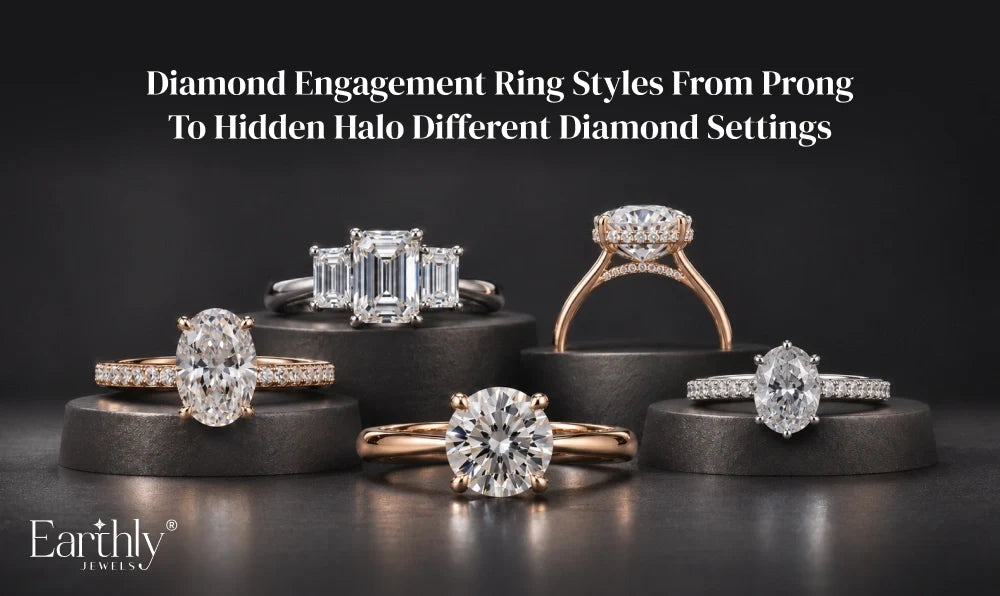
Prong Setting
Prongs are small metal claws. They hold the diamond up high. Four prongs show more of the diamond. Six prongs grip it more firmly.
- Look: Classic and bright.
- Shapes: Works with round, oval, pear, and most other shapes.
- Best for: People who want the most light.
- Versus: Shows more diamond than a bezel but holds it less fully.
- Care: Have the prongs checked now and then.
Bezel and Half-Bezel Setting
A bezel is a thin metal rim around the diamond. A half-bezel covers only part of the edge. The smooth shape rarely snags on clothes. Metal on the edge lets in a little less light.
- Look: Sleek, snug, and modern.
- Shapes: Suits square shapes like princess and emerald.
- Best for: Busy hands and active days.
- Versus: Covers more of the edge than prongs, so it protects more.
- Care: Clean around the rim with a soft brush.
Tension-Style Setting
This setting grips the diamond between two band ends. The diamond seems to float. It needs skilled work and a precise fit. Confirm your ring size before you order.
- Look: Bold and airy.
- Shapes: Suits round, princess, and emerald shapes well.
- Best for: Fans of a clean, modern shape.
- Versus: Looks lighter than a bezel but needs a more exact fit.
- Care: Ask your jeweller how the grip is tested.
Cathedral Setting
Two metal arches rise from the band. They lift the diamond up. This adds height and shows the diamond from the side. It works well for a solitaire engagement ring.
- Look: Tall and graceful.
- Shapes: Lifts round, oval, and cushion shapes with ease.
- Best for: People who want a raised profile.
- Versus: Sits taller than a plain prong band.
- Care: Expect the ring to sit a little higher.
Settings That Add Extra Sparkle
These designs add more diamonds to a diamond engagement ring. They add shine along the band or around the centre. These types of ring settings feel rich and detailed. Here is how each one works.
Pave Setting
Pavé comes from a French word for paved. Many tiny diamonds sit side by side. Small beads of metal hold each one. The band glitters from all angles.
- Look: Sparkling and detailed.
- Shapes: Pairs well with round, oval, and pear centres.
- Best for: People who love a sparkling band.
- Versus: Adds more shine than a plain band but needs more care.
- Care: Resizing a fully set band can be hard.
Channel Setting
Diamonds sit in a row between two metal walls. There are no prongs. The surface stays smooth and flush. It rarely snags on clothes.
- Look: Neat and smooth.
- Shapes: Sits neatly beside any centre shape.
- Best for: Daily wear and active hands.
- Versus: Lies flatter than pavé and has no tiny beads.
- Care: Gently clear dirt from the channel.
Three-Stone Setting


A three-stone engagement ring has three diamonds. One sits in the centre, with one on each side. It is often said to mean past, present, and future. The three-stone rings collection shows many looks.
- Look: Balanced and rich in meaning.
- Shapes: Side diamonds can echo or contrast the centre shape.
- Best for: People who want a ring with a story.
- Versus: Gives more presence than a single diamond.
- Care: More diamonds mean a little more cleaning.
Hidden Halo Setting
A hidden halo sits just under the centre diamond. From the top, it looks like a solitaire engagement ring. From the side, you see a ring of sparkle. It adds shine without a full halo.
- Look: Calm from above, bright from the side.
- Shapes: Works well with round, oval, and princess shapes.
- Best for: Solitaire fans who want a secret detail.
- Versus: Looks subtler than a full halo.
- Care: Clean the side details often.
Other Settings Worth Knowing
A few more settings are worth a look. These types of ring settings are less common but charming. Some rings mix two settings, so ask your jeweller about custom builds. The lab grown diamond rings collection shows many of them.
- Bar: Metal bars hold diamonds along the sides and leave the edges open.
- Flush: The diamond sits sunk into the band for a smooth surface.
- Cluster: Small diamonds group together to look like one large diamond.
- East-west: The diamond lies sideways across the finger for a fresh look.
- Toi et moi: Two diamonds sit side by side on one band.
- Half eternity: Diamonds run across part of the band in a channel or pavé set.
- Side accents: Small diamonds beside the centre add width and shine.
Mixing Two Settings in One Ring
Many rings blend two settings. The mix gives you the best of both. A jeweller can often tailor the details. Here are a few pairings.
- Cathedral and pavé: Tall arches meet a sparkling band.
- Bezel and hidden halo: A snug rim meets a quiet glow.
- Prongs and channel band: Bright light meets a smooth, flush band.
- Three-stone and pavé: Side diamonds meet a shimmering band.
Couple Engagement Ring Ideas Across Settings


A couple engagement ring often means two rings that match. Partners can pick one setting for both. They can also mix settings and share a metal. The couple collection shows many pairs.
Easy Ways to Match a Couple Engagement Ring
- Same setting: Both rings use a bezel or prongs for a matching look.
- Shared metal: Mixed designs in one metal still look like a pair.
- Shared detail: A tiny diamond or edge pattern links two rings.
- Comfort first: Smooth settings suit hands that work all day.
Types of Ring Settings at a Glance
This table sums up the types of diamond settings above. Use it before you shop for a diamond engagement ring. These are general notes. Each design can differ.
| Setting | Look | Best for | Care level |
| Prong | Classic and bright | Most light | Medium |
| Bezel | Sleek and snug | Active hands | Low |
| Tension-style | Floating | Modern taste | Medium |
| Cathedral | Raised and graceful | Tall profile | Medium |
| Pave | Glittering band | Extra shine | Higher |
| Channel | Smooth and flush | Daily wear | Low |
| Three-stone | Balanced | Meaningful gifts | Medium |
| Hidden halo | Subtle sparkle | Solitaire fans | Medium |
How to Choose a Diamond Engagement Ring Style
The best ring style suits your hands and habits. Think about a normal week. Then match the setting to that week. Match the diamond shape too.
Match the Setting to Your Lifestyle
- Active days: Pick a bezel, channel, or flush setting.
- Desk and travel: Prongs and arches work well with simple care.
- Love of sparkle: Pavé and hidden halo add shine.
- Love of meaning: A three-stone setting tells a story.
Match the Setting to the Diamond Shape
Round diamonds shine in prongs and arches. Pointed shapes such as pear need protected tips. Square shapes look sharp in a bezel. Lab grown diamonds come in all these shapes.
Plan for the Wedding Band
A wedding band sits beside your diamond engagement ring daily. Low settings sit flush with most bands. Tall settings may need a curved band. Try both rings together.
Questions to Ask Before You Buy
- How does the setting protect the diamond edges?
- Can the band be resized later?
- Does this ring style suit my wedding band?
Key Takeaways
- Setting: The types of diamond settings shape height, light, and safety.
- Prong: Four prongs show more diamond, while six hold it firmly.
- Bezel: A metal rim gives a snug fit for busy hands.
- Tension: The floating look needs a skilled maker.
- Cathedral: Arches lift the diamond and add height.
- Pavé: Tiny diamonds add shine but need routine checks.
- Channel: A flush row of diamonds feels smooth.
- Trio: Two side diamonds add meaning.
- Couples: A couple engagement ring works best when both feel at ease.
- Fit: Match your diamond engagement ring to your routine and wedding band.
Conclusion
A diamond engagement ring is more than a diamond. The setting shapes its look and wear. Prong, bezel, tension-style, cathedral, pavé, channel, three-stone, and hidden halo are all types of ring settings. Knowing the types of diamond settings makes choosing easy.
Start with your daily life. Then match the diamond shape and wedding band. Whether you love a solitaire engagement ring or bolder styles, trust your taste. Visit the engagement ring collection at Earthly Jewels to see more.
Frequently Asked Questions
Which setting makes a diamond look bigger?
Slim prongs often make a diamond look bigger. Less metal covers it. Long shapes, like oval and pear, also look larger.
Which setting suits everyday wear best?
Bezel, channel, and flush settings suit daily wear well. Their smooth surface rarely snags on clothes. Prongs also work with routine checks.
Is a bezel setting better than prongs?
Neither is best for everyone. A bezel guards the edge, while prongs let in more light. Pick the one that fits your day.
What are the main types of diamond settings?
The main types are prong, bezel, tension-style, cathedral, pavé, channel, three-stone, and hidden halo. Some rings mix two or more of these types of ring settings. A good jeweller can explain each build.
Can a couple engagement ring set use different settings?
Yes, a couple engagement ring set can mix settings. A shared metal or small detail keeps them a pair. Comfort should come first.
Do tension-style settings feel secure?
A well-made tension-style setting can feel very secure. It relies on skilled work and an exact fit. Ask your jeweller how the grip is tested.
Can I mix pave with a solitaire engagement ring?
Yes, a pavé band can sit under one centre diamond. This keeps the solitaire engagement ring look and adds shine. Check that it suits your wedding band.
How do I choose a diamond engagement ring style that lasts?
Pick a design that fits your daily life and taste. Classic settings like prong, bezel, and cathedral tend to stay in style. Choose skilled work and check the setting now and then.


Share:
Lab Grown Diamond Jewellery: What to Wear and How to Pair
Green Diamonds: Rarity, Meaning And Lab Grown Options