


Lab Grown Diamonds vs natural diamonds is a common question. Both are genuine diamonds made of crystalline carbon. Both score 10 on the Mohs scale. Both sparkle beautifully in rings, pendants, or earrings. So where do they actually differ?
The answer lies in how they form, how they are priced, and what matters most to you as a buyer. Lab created diamonds are grown in controlled laboratory conditions, while natural diamonds develop over geological time deep inside the Earth. That difference in origin affects supply, market pricing, resale expectations, and even how some buyers feel about their purchase.
This guide compares formation, price, quality, certification, environmental impact, and resale value. It offers practical tips for jewellery buyers in India. It also looks at the lab grown diamond solitaire. You will learn to compare diamonds on their merits rather than origin alone.
What Are Lab Grown Diamonds?
Lab Grown Diamonds are genuine diamonds produced in controlled laboratory environments. Manufacturers create conditions that encourage carbon to form diamond crystals, giving them the same core structure as diamonds formed underground. Only their production method distinguishes them from natural alternatives.
Two main methods are used:
- Chemical Vapor Deposition (CVD): Carbon-containing gas builds up diamond material in layers inside a chamber.
- High Pressure High Temperature (HPHT): Equipment creates intense pressure and heat to encourage diamond crystal growth.
Both methods produce diamond material for jewellery. Lab created diamonds consist of crystalline carbon. Unlike cubic zirconia and moissanite, they are genuine diamonds. Other materials may resemble diamonds but have different properties. Read each product listing carefully.
What Are Natural Diamonds?
Natural diamonds form deep within the Earth under intense heat and pressure over long periods. Mining operations recover diamond-bearing material, which then undergoes several stages before reaching jewellery stores.
- Formation: Develop naturally through geological processes.
- Rarity: Each diamond has its own geological history.
- Processing: Diamonds undergo sorting, cutting, polishing, and grading.
- Pricing: Quality, supply, demand, and distribution affect the final price.
- Buyer Preference: Some buyers value natural origin, while others focus on appearance, grading, and cost.
Lab Grown Diamonds vs Natural Diamonds: Main Differences
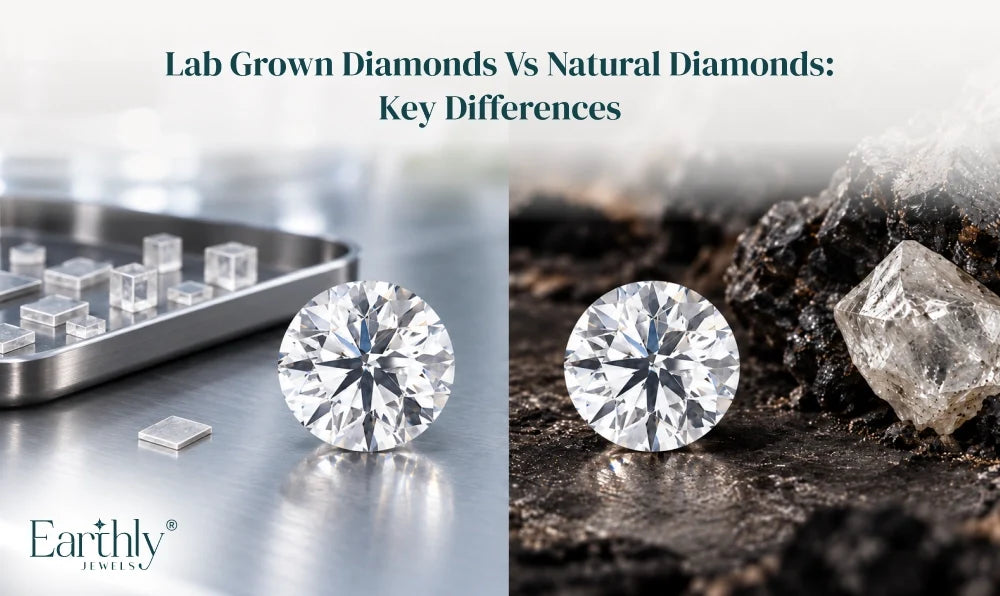
Both types can be assessed using the four Cs: cut, colour, clarity, and carat weight. Their origins, however, influence supply and market pricing. The table below highlights the key differences.
| Feature | Lab Grown Diamonds | Natural Diamonds |
| Origin | Produced in a laboratory | Formed through geological processes |
| Formation time | Grown over a comparatively short period | Formed over geological time |
| Composition | Crystalline carbon | Crystalline carbon |
| Hardness | 10 on the Mohs scale | 10 on the Mohs scale |
| Appearance | Can display excellent brilliance and fire | Can display excellent brilliance and fire |
| Pricing | Usually lower for comparable grading characteristics | Often higher for comparable grading characteristics |
| Supply | Production can respond to demand | Depends on natural deposits and market conditions |
| Rarity | Production methods allow additional supply | Natural origin appeals to some buyers |
| Certification | Reports can document origin and grading details | Reports can document origin and grading details |
| Resale | Depends on demand, quality, and selling channel | Depends on demand, quality, and selling channel |
Important: Origin alone does not determine a diamond’s quality. Compare the grading report, cut, measurements, setting, and final price before choosing.
Why Do Lab Grown and Natural Diamonds Have Different Prices?
Lab grown diamonds often cost less than natural diamonds due to production methods, supply, and market demand. Prices vary by carat, cut, colour, and clarity. In India, compare the full jewellery cost, including the diamond, gold, making charges, and taxes. Always request a clear price breakdown before purchasing.
Use these points when comparing offers:
- Compare diamonds with similar carat weights, cuts, colours, and clarity grades.
- Check whether the quoted price covers the complete piece or only the diamond.
- Review gold purity, metal weight, design details, and making charges.
- Ask about return, exchange, and buyback policies.
- Compare grading reports before deciding.
Are Lab Grown Diamonds and Natural Diamonds Equal in Quality?
Both types can offer excellent hardness, brilliance, and durability. Performance depends heavily on cut quality, proportions, clarity, and craftsmanship, and a well-cut diamond reflects light beautifully regardless of origin.
The four Cs help buyers compare individual diamonds:
- Cut: How well the proportions and finish support light performance.
- Colour: The degree of colour present under the relevant grading system.
- Clarity: Internal features and surface characteristics under established grading conditions.
- Carat: The diamond’s weight, not its visible size alone.
Lab grown and natural diamonds vary in size, quality, and grade. Compare their specifications instead of judging them by origin alone. Their appearance may be similar, so check a verified grading report to confirm the diamond’s origin.
Diamond Certification: What Should You Check?
A diamond report outlines key details about the stone and may state whether it is lab-grown or natural. Diamond certification helps you compare stones, but also check the jewellery and the seller. Use this checklist:
- Laboratory: Look for a report from a recognised gemological grading organisation.
- Report number: Check that it matches the report and its verification details.
- Origin: Confirm whether the diamond is described as laboratory-grown or natural.
- Four Cs: Review the cut, colour, clarity, and carat information.
- Measurements: Compare the listed dimensions with the diamond being sold.
- Seller details: Request an itemised invoice and written jewellery policies.
IGI and GIA are recognised names in diamond grading. Their report formats and services can differ. Review the document carefully. Confirm it corresponds to the diamond you intend to buy.
Advantages and Limitations of Lab Grown Diamonds
Lab Grown Diamonds suit buyers who prioritise budget flexibility and a broad choice of designs. They can make larger sizes or higher grades more accessible at lower prices, though buyers should understand the market limitations.
Advantages
- Budget flexibility: Comparable laboratory-grown diamonds often cost less than natural ones.
- Design choices: A lower diamond price may leave more room for a preferred setting.
- Diamond properties: They offer the fundamental properties of diamond material.
- Everyday wear: Their hardness suits many jewellery designs.
Considerations
- Resale uncertainty: Future offers depend on market demand and the buyer.
- Supply: Production methods can increase availability as manufacturing develops.
- Energy use: Environmental impact depends partly on production methods and electricity sources.
- Personal preference: Some buyers prefer diamonds formed naturally over geological time.
Advantages and Limitations of Natural Diamonds
Natural diamonds appeal to buyers who value geological history, rarity, and tradition. They remain popular for engagement rings, family jewellery, and special occasions. Their higher price may limit the size or grade available within a budget.
Advantages
- Natural origin: Every diamond has a geological formation history.
- Rarity appeal: Some buyers value the limited supply of particular stones.
- Traditional significance: Natural diamonds hold an established place in jewellery traditions.
- Collector interest: Certain rare diamonds attract specialist buyers.
Considerations
- Higher cost: Comparable natural diamonds often carry a higher price.
- Variable quality: Each diamond needs individual assessment through its grading characteristics.
- Sourcing questions: Mining can raise environmental and labour concerns across supply chains.
- Resale uncertainty: Ordinary retail diamonds should not be treated as guaranteed investments.
Environmental and Ethical Considerations
Environmental impact is not determined by origin alone. Mining can disturb land and affect local ecosystems, while laboratory production requires electricity and specialised equipment. Impact depends on how a diamond is produced, sourced, and transported.
Lab Grown Diamonds avoid mining, but their production still consumes energy, and the energy source matters. Natural diamond operations also vary in environmental practices and supply-chain oversight. Neither category should automatically be described as impact-free.
Ask sellers for sourcing information and evidence behind their environmental claims. Look for specific details rather than broad labels such as “eco-friendly.”
Lab Grown Diamond Solitaire: Is It Right for You?
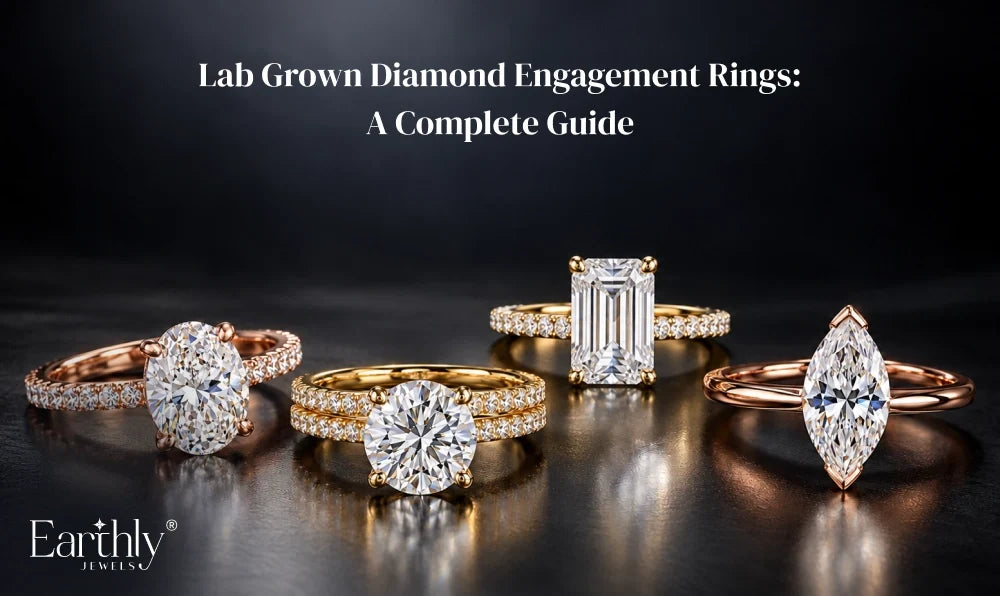
A lab grown diamond solitaire features one central diamond in a simple, elegant setting. This style suits engagement rings, pendants, and other jewellery. Its single-diamond design highlights the stone’s cut, shape, and proportions. You can choose from minimal settings or more detailed designs.
A lab grown diamond solitaire may suit those who prefer timeless and versatile jewellery. Consider your budget when selecting the diamond’s size and overall quality. Check the cut, colour, clarity, and carat weight before making a decision. Choose a setting and metal that offer comfort, security, and easy maintenance.
Consider these factors before choosing a solitaire:
- Diamond Shape: Explore round, oval, pear, and other shapes to find your preferred look.
- Size and Budget: Lab grown diamonds may offer larger options within your budget.
- Diamond Quality: Assess cut, colour, clarity, and carat weight before buying.
- Setting and Security: Consider prong and bezel settings for their appearance and protection.
- Metal and Comfort: Check gold purity, metal colour, maintenance needs, and everyday comfort.
Coloured Diamonds: Another Option to Explore
Diamonds can display colours such as yellow, pink, blue, and green. Natural fancy-colour diamonds can be rare and expensive. Laboratory technology also produces coloured diamonds for jewellery. Price depends on colour, intensity, size, quality, and origin. Do not assume all lab-grown coloured diamonds cost the same. Check the grading report. Ensure the seller describes the origin clearly.
Resale Value and Investment Expectations
Diamond jewellery is best purchased for personal enjoyment, not guaranteed returns. Resale offers may fall below the original price for both diamond types. Natural diamond resale demand can vary with quality, rarity, and market conditions.
Lab grown diamond resale values also depend on demand and pricing changes. If resale matters, check written buyback terms and all deductions. Never rely on promises of future appreciation.
How to Choose the Right Diamond
Let your priorities guide the decision rather than assumptions about which type is universally better.
- Set your budget: Include the setting and applicable charges.
- Choose your priority: Size, appearance, natural origin, rarity, or price.
- Compare the four Cs: Review cut, colour, clarity, and carat for each option.
- Check certification: Verify the report details and the stated origin.
- Inspect the setting: Review the metal, craftsmanship, comfort, and security.
- Read the policies: Understand returns, exchanges, repairs, and resale conditions.
- Compare final prices: Evaluate similar jewellery pieces before deciding.
Key Takeaways
- Origin: Lab grown diamonds form in laboratories. Natural diamonds develop underground.
- Composition: Both types contain crystalline carbon.
- Hardness: Both score 10 on the Mohs hardness scale.
- Price: Lab grown diamonds often cost less than natural diamonds.
- Quality: Compare cut, colour, clarity, and carat weight.
- Certification: Check the grading report and confirm the diamond's origin.
- Methods: HPHT and CVD are two lab diamond creation methods.
- Appearance: Both types can look alike to the naked eye.
- Environment: Consider mining impacts and energy used during production.
- Resale: Neither type guarantees a financial return.
Conclusion
Lab Grown Diamonds and natural diamonds differ in origin, supply, and typical market prices. Both can suit fine jewellery when their quality and craftsmanship meet your expectations. Checking grading reports, comparing prices, and reviewing seller policies will help you decide with confidence.
A lab grown diamond solitaire may suit buyers prioritising design and budget. Natural diamonds appeal to those valuing geological origin and rarity. Consider how often you will wear the piece. Choose the diamond that feels right for you.
FAQs
1. How are Lab Grown Diamonds made?
Manufacturers use processes such as CVD and HPHT. These produce diamond crystals that can be cut and polished for jewellery.
2. Do lab created diamonds have the same properties as natural diamonds?
Both have a carbon-based diamond structure and a Mohs hardness of 10. Their origin differs, and specialist gemological testing can identify that difference.
3. Why do Lab Grown Diamonds usually cost less?
Laboratory production can increase supply and often lowers prices compared with natural diamonds of similar grades. The final price still depends on carat weight, cut, colour, clarity, and the seller.
4. How can I check a diamond’s origin?
Request a grading report from a recognised laboratory. Verify its report number. Review the origin information alongside the listed characteristics.
5. Is a lab grown diamond solitaire suitable for an engagement ring?
Yes. A solitaire setting can showcase a single stone in a simple or detailed design. Compare cut, shape, setting, and total cost before choosing.
6. Can I resell a lab grown or natural diamond later?
Resale offers depend on quality, market demand, condition, and the buyer. Ask for written buyback or exchange terms rather than assuming you will recover the original price.
7. Which should I choose: Lab Grown Diamonds or natural diamonds?
Lab Grown Diamonds suit buyers seeking flexibility in price and size. Natural diamonds suit those who value geological origin and rarity.

Share:
Lab Grown Diamond Jewellery Gift Ideas for Every Special Occasion
Lab Grown Diamond Engagement Ring: A Complete Guide