


There is something timeless about the way an oval diamond sits on a finger. It draws the eye and commands attention. It carries a sense of quiet luxury few other shapes can match. Over the past several years, the oval diamonds has moved from a niche favorite to a global leader. It is now one of the most sought-after cuts in the world of fine rings.
The shift in what people want from an engagement ring has been significant. Buyers today are more informed, more design conscious, and more intentional about what their ring represents. They want a stone that looks stunning in photographs and flatters the hand. It must hold deep meaning without breaking the bank.
This growing awareness has also sparked a massive rise in lab grown diamond engagement rings. People are realising they can own a larger, more brilliant stone. Lab grown alternatives share the same physical and optical properties as mined diamonds. And when that stone is an oval cut diamond, the combination becomes nearly impossible to resist.
Why Oval Diamonds Are Ideal for Engagement Rings
The oval cut diamond has earned its place at the top of engagement ring preferences for very good reasons. Beyond aesthetics, these gems offer undeniable beauty. Their appeal lies in how the shape performs and feels. This design continues to impress long after the proposal has passed.
Shape and Overall Appearance
The oval cut diamond is defined by its elongated, symmetrical form that curves gently on all sides. Unlike sharper cuts with defined corners, the oval flows naturally. It feels organic to the eye. Its balanced proportions provide completeness. No awkward angles distract from the stone itself.
- Universally Flattering: The elongated shape creates a graceful illusion that suits all hand types, making shorter fingers appear longer and longer fingers appear more elegant.
- Design Harmony: The soft curves work harmoniously with almost any setting style, from minimalist solitaires to intricate vintage metalwork.
- Organic Aesthetic: The lack of sharp edges provides a natural, flowing look that feels more integrated with the wearer’s hand than geometric cuts.
Sparkle and Light Performance
The oval cut diamond uses a brilliant faceting style. It is designed to maximize the return of light. Every facet is angled with precision. This reflects and refracts light across the full surface. The result is a sparkle both intense and warm. It gives the diamond a rich, alive depth in different lighting.
- Brilliant Cut Faceting: Engineered to mirror the light-gathering capabilities of a round brilliant, ensuring maximum fire and brilliance.
- Generous Light Return: Because of its larger surface area, the diamond catches light from across a room and distributes it across the entire stone.
- Dynamic Glow: The unique faceting ensures the stone shifts and glows naturally, avoiding a "clinical" look and opting for a warmer, more inviting radiance.
Visual Size Advantage
One of the most talked-about benefits is the oval cut diamonds visual size. It appears larger than its actual carat weight. The elongated form spreads the diamond across a greater surface area. This creates the perception of a noticeably bigger stone. This is a meaningful advantage for anyone working within a budget, as it provides more visual impact per carat.
- Greater Surface Area: The distribution of mass across an elongated axis makes a 1-carat oval visually outperform a 1-carat round diamond.
- Budget Efficiency: It allows buyers to achieve a "large stone" look without the price tag associated with higher carat weights in deeper cuts.
- Lab-Grown Synergy: When paired with lab-grown diamonds, this advantage is amplified, allowing for significant visual impact and ethical clarity at a lower price point.
Elegant Finger Enhancement
Beyond size, the oval cut diamond has a lovely way of making fingers look longer and more slender. The elongated axis, when oriented vertically, creates an unbroken line. This draws the eye upward. This optical effect is subtle but consistent. It is a top choice to enhance the hand’s natural beauty.
- Slenderizing Effect: The vertical orientation acts as an extension of the finger, creating a more sophisticated and tapered appearance.
- Daily Confidence: Because the ring enhances the hand’s natural lines, many wearers feel more confident wearing it as an everyday piece.
- Visual Continuity: The smooth curves prevent the "choppy" look that square or rectangular stones can sometimes create on the finger.
Why Oval Diamond Is a Leading Choice for Engagement Ring Styles
The oval cut diamond occupies a rare, wonderful space in design. It feels both classically romantic and quietly modern. This dual quality is a large part of why it has stayed at the forefront of trends. Designers love working with the oval because it gives them tremendous flexibility across minimalist and maximalist aesthetics.
- Versatile Styling: Pairs beautifully with vintage-inspired halos, sleek contemporary bands, or even unique three-stone arrangements.
- Perceived Value: Delivers a better investment feel because the stone looks more substantial than its technical weight suggests.
- Modern Dominance: The rise of lab-grown diamonds has solidified the oval's popularity, as modern buyers gravitate toward shapes that maximize ethical and visual value.
Popular Oval Diamond Engagement Ring Styles


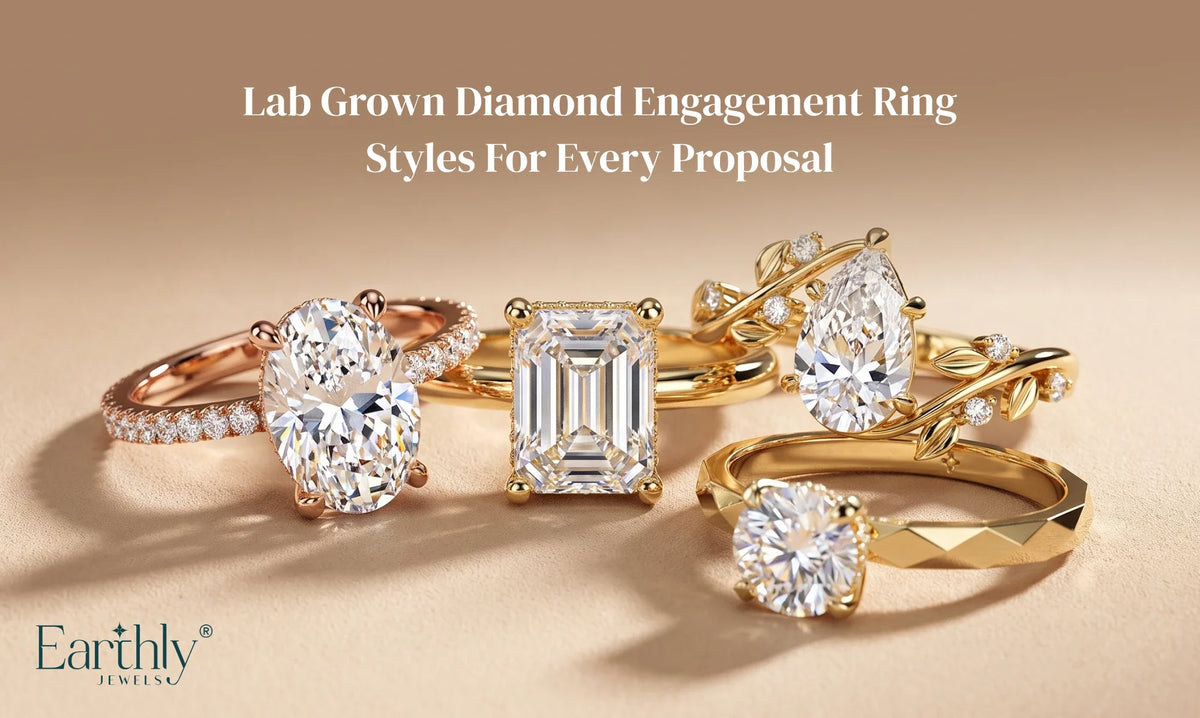
The oval cut diamonds are wonderfully versatile, and it shines across a range of ring settings and design philosophies. From the simplest solo setting to the most layered design, options abound. There is an oval cut diamond ring for everyone.
Solitaire
The solitaire setting places a single oval cut diamond at the centre of a clean, unadorned band. This style celebrates the stone above everything else and is the perfect choice for someone who values understated elegance.
- Features one centre oval diamond with no side stones
- Lets the natural brilliance of the oval take full focus
- Works beautifully in yellow gold, rose gold, white gold, and platinum
- Ideal for those who prefer a timeless, minimalist aesthetic
- The simplest yet most enduring engagement ring style
Hidden Halo
The hidden halo setting places small diamonds just beneath the centre stone. Tucked away, they are not immediately visible. When light catches the ring, this hidden layer adds a surprising depth and glow.
- Micro pavé diamonds sit beneath the girdle of the oval stone
- Creates a floating, elevated appearance for the centre diamond
- Adds extra sparkle without visually overwhelming the design
- A modern twist on the classic halo that feels fresh and refined
- Perfect for those who want detail without an overtly embellished look
Halo
The classic halo surrounds the oval cut diamond with a frame of smaller stones. This adds brilliance and makes the centre stone appear larger. The halo naturally follows and enhances the oval's curved outline in a way that feels seamless.
- A complete frame of diamonds encircles the oval centre stone
- Makes the centre diamond appear significantly larger
- Adds considerable brightness and all around sparkle
- Available in single halo, double halo, and floral halo variations
- One of the most popular and widely loved settings for oval diamonds
Three Stone
The three stone ring places the oval cut diamond at the centre flanked by two side stones. This setting carries symbolic meaning, often representing the past, present, and future of a relationship.
- Centre oval is flanked by two matching or complementary stones
- Side stones are commonly oval, pear, round, or tapered baguette shaped
- Adds sparkle and visual width to the overall ring design
- Deeply meaningful and often chosen for anniversary upgrades too
- Works especially well with lab grown diamond side stones for a cohesive look
Toi et Moi
The Toi et Moi style features two centre stones set side by side. The oval is often paired with round, pear, or marquise shapes. This design has a distinctly personal and editorial quality to it.
- Two stones of equal or complementary size sit side by side
- Symbolises two people joined together, making it deeply romantic
- The oval pairs beautifully with pear, round, or emerald shapes
- Has a bold, fashion forward look that stands apart from traditional styles
- A growing favourite among those seeking something truly one of a kind
Styling Tips for Oval Cut Diamond Rings
- For petite hands: Choose a slender band and a moderately sized oval to keep proportions balanced and elegant.
- For wider fingers: A slightly larger oval with a wider band creates a bold and well balanced look.
- For a vintage feel: Pair an oval with a milgrain edged band or a floral halo setting for a romantic, antique inspired finish.
- For a modern look: Set the oval in a sleek yellow gold or rose gold thin band with minimal detailing.
- For maximum sparkle: Choose a halo or hidden halo with a pavé band for all around brilliance.
Oval Cut Diamond vs Other Diamond Shapes
Understanding how the oval compares to other popular shapes can help you make a more informed and confident choice. Here is a clear comparison across the most important factors.
| Feature | Oval Cut Diamond | Round Diamond | Princess Cut | Pear Shape |
| Visual Size | Appears larger than carat weight | Appears true to carat weight | Slightly smaller appearance | Appears elongated and large |
| Sparkle | Excellent brilliant faceting | Maximum brilliance | Strong brilliance | Good brilliance |
| Budget Value | High, less premium than round | Lower, highest price per carat | Good value | Good value |
| Style Appeal | Classic and contemporary | Timeless and traditional | Modern and geometric | Romantic and distinctive |
| Finger Effect | Elongates beautifully | Neutral effect on finger | Neutral to slight widening | Elongates significantly |
The oval cut diamond offers a large visual size and exceptional sparkle. This shape provides better pricing than a round diamond. Such a cut has broad style appeal and creates a flattering effect on the finger.
How to Choose the Right Oval Cut Diamond for an Engagement Ring
Choosing an oval diamond is a rewarding process when you know what to look for. The right stone is not simply the biggest or most expensive option. The perfect choice balances proportion, light, setting, and personal taste. This ensures the final piece feels exactly right.
Get the Proportions Right
The length-to-width ratio determines the diamond's silhouette. The 1.30 to 1.50 range is the classic sweet spot for a balanced look. Lower ratios provide a rounder, fuller appearance. This feels soft and substantial. Higher ratios closer to 1.50 create a dramatic, elongated shape. Ultimately, the right choice depends on personal preference. Viewing different ratios side-by-side helps identify the most flattering option.
- Classic Range: A 1.30 to 1.50 ratio is the most universally flattering and balanced range for an oval.
- Fuller Look: Lower ratios (closer to 1.30) give a rounder appearance similar to a soft cushion or round cut.
- Elongated Look: Higher ratios (up to 1.50) create a more dramatic, slenderizing effect on the finger.
- Visual Assessment: Always view the diamond from directly above to ensure the outline feels symmetrical and not overly stretched.
Assess Light Performance and the Bow Tie Effect
Light performance defines a diamond's beauty. For ovals, this involves watching for the "bow tie effect." This is a dark shadow caused by light leakage. A faint bow tie is common and acceptable. However, a prominent dark patch can significantly dull brilliance. It is essential to observe the diamond in motion. Check various lighting conditions for even light return.
- Consistent Brilliance: Look for even light return across the full surface of the stone in both natural and artificial light.
- Bow Tie Awareness: A faint bow tie is normal, but avoid stones with a strong, dark, and clearly visible shadow at the center.
- Dynamic Viewing: Always ask for a video or view the diamond in motion to see how it catches light from different angles.
- Lighting Check: Test the stone in both natural daylight and indoor lighting to ensure it maintains its glow everywhere.
Select the Right Setting
The setting protects the stone and defines the ring's character. Four or six prongs are popular choices for maximizing light entry. Unlike marquise cuts, ovals lack sharp corners. However, placing prongs at the tips adds security for daily wear. A bezel setting offers full-edge protection for active lifestyles. An "east-west" orientation provides a bold, contemporary twist. This stands apart from traditional vertical placement.
- Optimal Protection & Brilliance: Utilizing a four or six-prong mounting provides the ideal mix of diamond safety and peak light penetration.
- Tip Protection: Ensure prongs are placed thoughtfully at the ends of the oval to protect the stone from accidental bumps.
- Bezel Style: A metal rim around the edge provides a sleek look and superior protection for active wearers.
- Orientation Options: Vertical settings are classic for elongating fingers, while east-west settings offer a unique, modern flair.
Choose Your Metal Thoughtfully
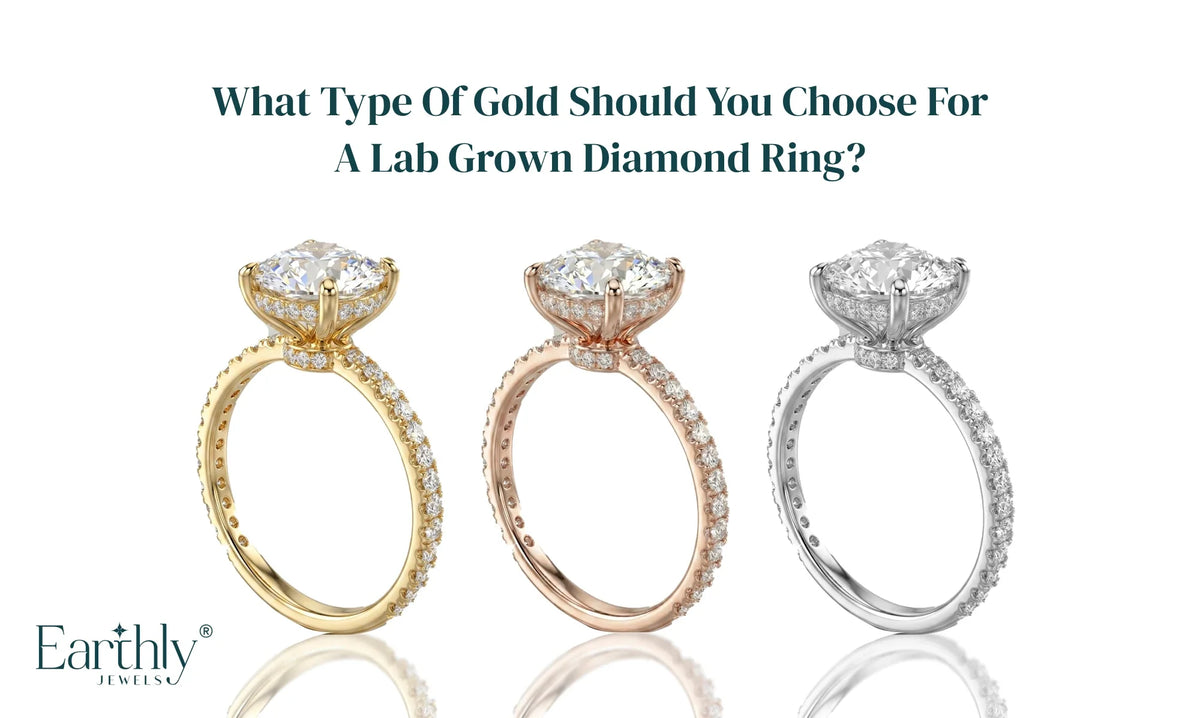
Metal serves as the diamond's backdrop. This choice influences the ring’s mood and the stone's perceived color. Yellow gold offers vintage warmth. Rose gold provides a romantic blush for warmer skin tones. White gold and platinum create a bright, contemporary finish. These metals emphasize icy brilliance. Such choices often match the wearer's existing collection.
- Warm Classics: Yellow gold adds a timeless, romantic quality and pairs excellently with vintage-inspired designs.
- Romantic Blush: Rose gold creates a soft aesthetic that is particularly flattering for warm or olive skin tones.
- Modern Contrast: White gold and platinum provide a crisp, bright backdrop that highlights the diamond's white brilliance.
- Durability: Platinum is denser and more resistant to wear than gold, making it an excellent long-term choice for daily wear.
Why Choose Lab Grown Diamond Engagement Rings
Lab grown diamond engagement rings have moved well beyond being simply a budget option. They represent a genuinely better choice for many buyers, for reasons that go far beyond price alone. Whether you are drawn by the cost savings, the ethical clarity . The sheer quality of the stone, lab grown diamonds deliver on every front.
A Smarter Way to Spend on Something That Lasts
Many people choose lab-grown diamond engagement rings for the immediate price difference. This cost saving is a tangible benefit. The savings are not marginal. They are substantial enough to change what kind of ring you can realistically afford.
What the Pricing Advantage Actually Means for You
A lab grown oval cut diamond typically costs forty to sixty percent less than a mined stone. This price difference applies to gems of the same carat weight, color, and clarity grade. That is not a small difference. It is the kind of saving that opens up entirely new possibilities for what your ring can look like.
- Select a noticeably larger center stone within your existing budget.
- Invest in an intricate, detailed setting without overspending.
- Opt for higher clarity or color grades than mined stones allow.
- Allocate the remaining funds toward other meaningful milestones.
- Prioritize both beauty and quality simultaneously thanks to these savings.
Maximising Value Without Compromise
The pricing advantage of lab grown diamonds does not come at the cost of anything meaningful. The stone you receive is identical in every measurable way to a mined diamond. You are simply paying for the diamond itself rather than for the costs associated with large scale mining operations.
- Lab grown diamonds carry the same resale classification as mined diamonds
- They are graded by the same international gemological laboratories
- Colour, cut, clarity, and carat weight are assessed using identical standards
- You receive full certification and documentation with every stone
- The lower price reflects production efficiency, not reduced quality
A Choice That Reflects Your Values
Beyond the financial benefit, lab grown diamonds resonate deeply with many buyers. These stones offer a meaningful purchase. They avoid the ethical complications of traditional mining.
The Environmental Case for Lab Grown Diamonds
Diamond mining involves significant disruption to the earth. Large scale excavation, water usage, and land clearing are all part of the conventional mining process. Lab grown diamonds sidestep these concerns entirely by being created in controlled laboratory environments using advanced technology.
- No open pit or underground mining is required
- Land ecosystems are not disturbed during the creation process
- Water consumption is significantly lower compared to mining operations
- Lab grown production continues to move toward renewable energy sources
- Choosing lab grown is a meaningful step toward more responsible consumption
Human and Social Responsibility
The social dimension of diamond sourcing has been a concern for decades. Lab grown diamonds remove this uncertainty entirely. Each stone is created in a traceable, regulated environment. There is no ambiguity about its origin. The production conditions are also clearly defined.
- No risk of association with conflict or unethical supply chains
- Full traceability from creation to certification to purchase
- Workers involved in lab grown production operate in safe, regulated settings
- Buyers can feel completely confident in the origin of their stone
- An ethical choice that matches the values of a new generation of buyers
Quality That Stands Up to Every Standard
Perhaps the most important thing to understand about lab grown diamonds is that they are not imitations or substitutes. They are real diamonds in every scientific, optical, and physical sense of the word. The technology used to create them replicates the exact conditions under which diamonds form naturally deep within the earth.
Identical Physical and Chemical Properties
Lab grown and mined diamonds share the same material. Both consist of pure crystallized carbon in a cubic structure. They score ten on the Mohs scale as the hardest known substances. Density and thermal conductivity match exactly. Identical light performance stems from the same refractive index. Experts require specialized equipment to distinguish them. Their brilliance and beauty remain completely indistinguishable.
- Pure carbon in a cubic crystal lattice forms the chemical composition of both.
- A ten on the Mohs scale represents the identical hardness rating.
- Density and thermal conductivity match those found in mined diamonds.
- Identical light performance results from an equivalent refractive index.
- Specialized equipment is required for a gemologist to distinguish between them.
The Same Brilliance, the Same Beauty
Visually, a lab grown oval diamond is indistinguishable from a mined one. The facets are cut using the same techniques, graded using the same criteria, and set using the same methods. The sparkle in a lab grown oval cut diamond is identical to that of a mined diamond. Both stones show the same brilliance when they share the same grade.
- Brilliant faceting produces identical light return and fire
- Cut quality is assessed and graded by the same gemological standards
- Available in the full range of colour and clarity grades
- Certified by leading laboratories including IGI and GIA
- The beauty you see is real, lasting, and completely genuine
For an oval cut diamond in particular, the lab grown option is especially compelling. The larger visual size of the oval creates a tremendous impact. Achieving a greater carat weight for the same budget increases this effect. The result is a ring that genuinely stuns.
Key Takeaways
- Visual Size: The oval diamond appears noticeably larger than its actual carat weight, giving you more visual impact for your investment.
- Brilliance: Brilliant faceting delivers exceptional sparkle that catches light from every angle and in every environment.
- Elegance: The elongated shape creates a graceful, elongating illusion on the finger that flatters all hand types.
- Value: Oval diamonds are priced lower per carat than round diamonds while delivering comparable or superior visual results.
- Trend: The oval has moved from trending to enduring, holding its position at the top of engagement ring preferences across style categories.
- Versatility: The oval adapts beautifully to solitaire, halo, hidden halo, three stone, and toi et moi settings with equal ease.
- Affordability: Lab grown oval diamonds offer the same beauty and quality at a fraction of the cost of mined stones.
- Ethics: Choosing a lab grown diamond means choosing a stone with a clean, traceable, and environmentally responsible origin.
The oval cut diamond has earned its place at the top of the engagement ring world through genuine merit. It flatters the finger and maximizes visual size. It delivers exceptional brilliance and adapts to virtually any setting style. This shape feels both timelessly romantic and completely of the moment. Such a combination is extraordinary for any piece of fine design.
The rise of lab grown diamond engagement rings has strengthened the oval's position. More people discover they can own a stunning, ethically sourced stone. This comes at a price that makes sense for their lives. The oval cut diamond becomes the natural shape to choose. It rewards the investment visually in a way few other shapes can.
If you have been drawn to the idea of an oval diamond, that instinct is worth exploring. At Earthly Jewels, we believe every engagement ring should feel meaningful. Every ring marks a special moment. Our collection of lab grown oval cut diamond rings brings together beauty and quality. We prioritize conscious craftsmanship in every piece. We invite you to explore what oval diamonds can look like on your terms. You can choose your own scale and tell a story you feel proud to share.
Frequently Asked Questions
1. What makes an oval cut diamond different from a round diamond?
The oval cut diamond has an elongated shape. This form spreads across more surface area on the finger. The stone appears larger than a round diamond of the same carat weight. It also costs less per carat than a round, giving you better visual impact for your budget.
2. Does an oval cut diamond show the bow tie effect?
Some oval diamonds have a bow tie effect, a faint shadow across the centre of the stone. A mild one is common and barely noticeable, but a strong bow tie visibly reduces brilliance. Always view the stone in person or via video before buying.
3. Are lab grown oval diamonds real diamonds?
Yes, completely. Lab grown diamonds consist of pure crystallized carbon. They are identical to mined diamonds. These stones share the same hardness and brilliance. They also possess the same optical properties. The only difference is the origin. They are created in a laboratory instead of the earth.
4. What is the ideal length to width ratio for an oval diamond ?
A ratio between 1.30 and 1.50 is the most balanced range. This provides a visually pleasing oval cut diamond. Ratios below 1.30 give a rounder look. Ratios above 1.50 create an elongated silhouette. Personal preference matters most.
5. Which setting works best for an oval cut diamond engagement ring?
The oval works beautifully in almost any setting. It suits a clean solitaire, a brilliant halo, or a romantic three-stone design. The best setting matches the wearer's personality. It should also fit their daily lifestyle.
6. Is an oval cut diamond a good choice for everyday wear?
Yes, the oval is one of the most practical shapes for daily wear. It has no pointed corners that can chip, and its smooth curved outline holds up well against everyday knocks. It is as durable as it is beautiful.
7. How much can I save by choosing a lab grown oval cut diamond over a mined one?
Lab grown oval diamonds cost forty to sixty percent less than mined diamonds. This applies to the same size and quality. That saving can buy a larger stone. It can also fund a detailed setting. Some see it as a smarter overall investment.

Share:
Diamond Quality Secrets: Learn the 4Cs Of Diamonds Before You Buy
Lab Grown Diamonds vs Natural Diamonds: The Ultimate Comparison Guide