


A CVD diamond is a real diamond grown in a lab from a carbon-rich gas. Many Indian shoppers now see it in rings, studs, and pendants. This guide answers the questions buyers ask most, from price to care. You will finish with clear numbers, simple tips, and the confidence to compare offers.
The answer to what is a CVD diamond starts with its origin. It grows atom by atom inside a sealed chamber. The finished diamond has the same structure, hardness, and fire as a mined one. The main difference for buyers is how and where the diamond is grown, which can also affect its market price.
Price worries most buyers, so we cover the CVD diamond price in India with real ranges. We also look at jewellery styles, including solitaire rings and engagement rings. A short buying checklist helps you avoid common mistakes. Each section uses simple words and short steps.
The Basics Behind a CVD Diamond
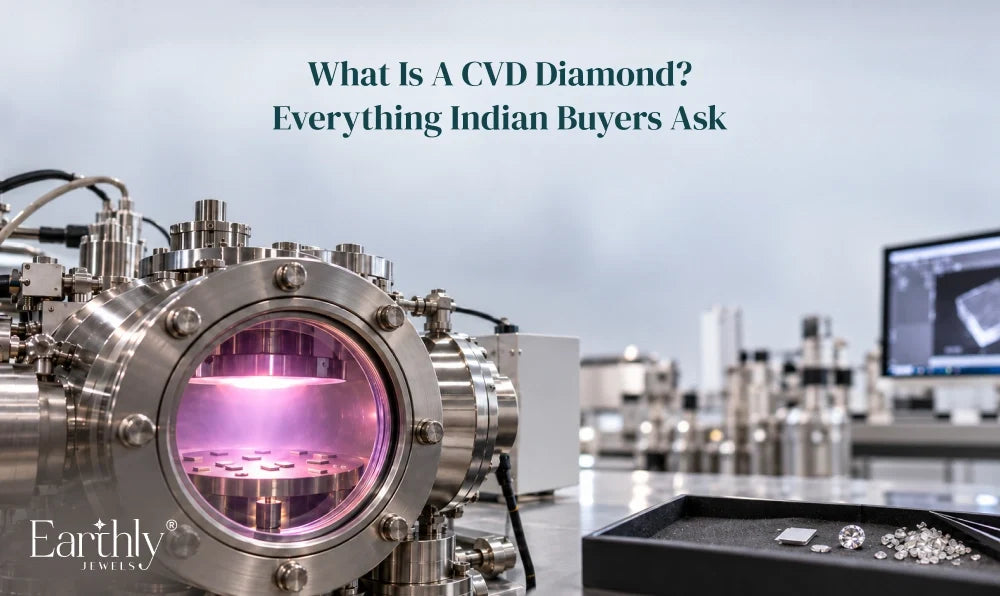
Chemical vapour deposition gives the CVD diamond its name. Scientists use a thin slice of diamond as a seed. Carbon-rich gas builds new diamond on that seed, layer by layer. Most growth runs for a few weeks, depending on the size wanted.
Where CVD Lab Grown Diamonds Come From
CVD lab grown diamonds start inside a vacuum chamber. Methane and hydrogen gases enter, and the chamber heats up. A plasma breaks the gas apart, so carbon settles on the seed. Skilled teams then cut and polish the rough crystal into a finished diamond.
- Seed: a thin diamond slice guides the shape of the new crystal.
- Gas mix: methane supplies carbon, and hydrogen helps control the growth.
- Plasma: energy splits the gas so carbon can attach to the seed.
- Finishing: cutters shape and polish the rough crystal by hand and machine.
Is a CVD Diamond Real?
Yes, it is a real diamond with the same chemical makeup as a mined one. It is not a simulant like cubic zirconia or moissanite. Basic jewellers' testers read it as diamond, just as they read mined ones. Only advanced lab equipment can tell the two origins apart.
CVD vs HPHT at a Glance
Two methods grow most lab diamonds today. Both create real diamonds, so neither one is a lesser choice. The table shows how the methods differ in plain terms. Reports from grading labs often name the growth method.
| Feature | CVD | HPHT |
| Growth style | Gas builds diamond on a seed | Heat and pressure turn carbon into diamond |
| Setup | Low-pressure vacuum chamber | Very high-pressure press |
| Result | Real diamond | Real diamond |
| Report wording | Lists CVD | Lists HPHT |
CVD Diamond Price in India: What to Expect
Prices change by retailer, size, and quality, so treat every figure here as a guide. Retailer guides in 2026 show lab grown diamonds from approximately ₹8,000 for small sizes. Large sizes in fine jewellery can reach approximately ₹4,50,000 or more. The CVD diamond price in India also moves with market demand.
1 Carat CVD Diamond Price Explained
The 1 carat CVD diamond price for a loose diamond often runs from approximately ₹35,000 to ₹1,20,000. Retailers quote different figures because grades, cuts, and reports differ. A finished ring with a 1 carat centre diamond often costs approximately ₹80,000 to ₹1,50,000. Always ask whether a quote covers the diamond alone or the full ring.
Loose Diamond vs Finished Ring
- Loose diamond: approximately ₹35,000 to ₹1,20,000 for 1 carat.
- Finished ring: approximately ₹80,000 to ₹1,50,000 with the setting.
- Extras: making charges and metal weight can lift the total.
CVD Diamond Price List by Size
Use this CVD diamond price list as a starting point, not a fixed quote. Figures come from broad retailer ranges and will shift over time. Quality grade, shape, and seller can move a quote up or down. Confirm the final price in writing before you pay.
| Item | Approximate range (₹) | Good to know |
| 0.50 carat loose diamond | Approx. 15,000 – 35,000 | Popular for studs and pendants |
| 1 carat loose diamond | Approx. 35,000 – 1,20,000 | Wide range due to grade and seller |
| 1 carat solitaire ring | Approx. 80,000 – 1,50,000 | Includes metal and setting |
| Small accent pieces | From approx. 8,000 | Light designs for daily wear |
What Moves the Price
Several details explain why two quotes for the same size can differ. Know them before you compare offers. Ask each seller to share the same details in writing. That makes your comparison fair and simple.
- Cut quality: a well-cut diamond looks brighter than a poorly cut one.
- Colour and clarity: higher grades usually cost more.
- Shape: round and fancy shapes can be priced differently.
- Lab report: a report from a known lab adds confidence.
- Setting: metal type, gold purity, and design add to the final bill.
CVD Diamond Jewellery for Every Occasion
CVD diamond jewellery covers every style, from slim chains to bold rings. Because CVD lab grown diamonds are real diamonds, design choices stay just as wide. Think about how often you will wear the piece before you choose. The sections below match common needs with simple ideas.
Why a CVD Diamond Solitaire Suits Many Buyers
A CVD diamond solitaire keeps the focus on one bright centre diamond. The clean design pairs well with office wear and festive outfits. Prongs hold the diamond high, so light enters from many sides. Bezel settings give extra protection for people with active hands.
- Everyday pendants: a single diamond adds quiet shine to any neckline.
- Gift choice: solitaires feel personal without needing a large budget.
Choosing CVD Diamond Engagement Rings
CVD diamond engagement rings give couples room to choose a bigger size within budget. Start by deciding the shape, since it sets the whole look. Round, oval, and emerald shapes remain popular choices. Then match the shape to the wearer's finger and lifestyle.
Settings That Work Well
Prong settings expose more of the diamond, allowing light to enter from different angles. Bezel settings wrap the edge in metal for a smooth, secure feel. Hidden halos add sparkle around the centre diamond without hiding it. Pavé bands carry small diamonds along the shank for extra shine.
Metal and Band Choices
Yellow, white, and rose gold all pair well with a diamond. White gold offers a cool look, while yellow gold feels warm. Slim bands keep the diamond front and centre. Wider bands suit people who prefer a bolder look on the hand.
Everyday CVD Diamond Rings Beyond Proposals
CVD diamond rings also work well for anniversaries, promotions, and self-gifts. Stackable bands let you add more rings over time to create your preferred look. Slim eternity-style rings add sparkle without needing a large centre diamond. Choose a low setting if you type or work with your hands daily.
Styling Ideas for CVD Diamond Jewellery
A good piece should suit your routine as well as your taste. These ideas help you pick designs for different moments. Start with one piece, then add more over time. Small changes in metal and size can make a big difference to the overall look.
Office and Daily Looks
Small studs and thin pendants fit well into a work day. Light designs rarely catch on sleeves or hair. A slim diamond bracelet adds shine without drawing too much attention. Pair them with simple outfits for a neat, calm finish.
Festive and Wedding Looks
Festive days call for pieces with more presence. A larger solitaire pendant glows well against silk and brocade. Matching diamond earrings and a ring create a polished set. Rose and yellow gold bring warmth to traditional outfits.
Pieces to Pair
- Ring and earrings: a matching pair looks neat and balanced.
- Pendant and studs: this duo suits almost any neckline.
Gift Ideas for Every Budget
Gifts do not need a large diamond to feel special. Small studs and pendants make thoughtful presents for birthdays. A solitaire ring suits anniversaries and big milestones. Match the piece to the person's daily style.
Smart Buying Tips for Indian Shoppers
Good habits matter more than any single trick when you shop. Compare at least three sellers, and keep notes on each quote. Ask for the same details from each one. This keeps the comparison fair and clear.
Questions to Ask Before You Pay
A confident seller answers these questions without hesitation. Write the answers down so you can compare later. Request the lab report details for any diamond above a small size. Check that the report number matches the diamond.
- Is the diamond CVD or HPHT, and does the report say so?
- Is the price for the diamond alone or the finished piece?
- What are the weight and purity of the gold setting?
- What are the return, resizing, and repair terms?
Mistakes to Avoid
Most regrets come from rushing the decision. A short pause lets you check details calmly. Avoid these common slips when you compare offers. Each one is easy to fix with a little planning.
- Judging by carat weight alone and ignoring cut.
- Skipping the written quote and report details.
- Choosing a setting that does not suit daily wear.
Simple Care Tips
Warm water and mild soap clean most CVD diamond jewellery well. Use a soft brush to clear oil from behind the diamond. Store each piece in its own pouch to avoid scratches. Have the prongs checked periodically, especially if the jewellery is worn often.
Daily Habits
- Remove rings before cooking, cleaning, or workouts.
- Wear jewellery after perfume and lotion have dried.
Periodic Checks
- Ask a jeweller to tighten loose prongs.
- Look over clasps and chains for wear.
Key Takeaways
- Origin: A CVD diamond grows from carbon gas inside a controlled chamber.
- Identity: It is a real diamond, not a simulant.
- Price: Retailer quotes vary widely, so compare several sellers.
- Carat: A 1 carat loose diamond often costs approximately ₹35,000 to ₹1,20,000.
- Rings: Finished solitaire rings cost more than the loose diamond alone.
- Solitaire: One centre diamond gives a clean and versatile look.
- Settings: Prong and bezel styles balance sparkle with security.
- Reports: Ask for lab report details and check the number.
- Terms: Confirm returns, resizing, and repair policies before paying.
- Care: Mild soap, a soft brush, and periodic checks help keep jewellery secure and well maintained.
Conclusion
A CVD diamond offers real diamond sparkle with clear, modern buying options. Know the price ranges, compare quotes in writing, and ask for report details. Pick a style that fits your routine, whether a pendant or a ring. With these steps, choosing your first one feels calm and simple.
You now understand what it is and how it is created. Use the price list and the 1 carat price as starting guides. Approximate figures change, so confirm each quote in writing. Then shop at your own pace and enjoy the choice.
Frequently Asked Questions
Are CVD lab grown diamonds real diamonds?
Lab grown diamonds share the same structure and hardness as mined diamonds. Their origin and growth process differ, while their core diamond properties are essentially the same. Grading labs report them as lab grown.
Are CVD diamond engagement rings a good choice?
Yes, they suit couples who want a larger look within budget. The diamond is real, so the ring wears like any other. Compare the setting, metal, and report before you decide.
Which CVD diamond rings suit daily wear?
Low settings and slim bands suit active hands best. Bezel and secure prong styles protect the diamond well. Choose a comfortable fit you will enjoy every day.
Who should choose a CVD diamond solitaire?
It suits anyone who likes a simple, classic design. One centre diamond pairs easily with many outfits. Pendants, studs, and rings all work in this style.
What is a fair 1 carat CVD diamond price?
Loose diamonds often cost approximately ₹35,000 to ₹1,20,000, depending on grade. Finished rings usually cost more than the loose diamond. Check the CVD diamond price list above to compare.
What is a CVD diamond made of?
It is made of pure carbon arranged in a diamond crystal. The carbon comes from gas inside a growth chamber. Lab grown diamonds contain the same material as diamonds mined from the Earth.
Should I ask for a lab report?
Yes, ask for one with every diamond above a small size. The report lists weight, grades, and the growth method. Match the report number to the diamond before paying.
How do I compare quotes from different sellers?
Ask each seller for the same details in writing. Compare weight, cut, grades, report, and metal side by side. Choose the offer that is clear, not just cheapest.
Can I resize a CVD diamond ring?
Yes, a skilled jeweller can resize most plain gold rings. Very detailed bands may have limits. Ask about resizing terms before you buy.
Can I reset a CVD diamond later?
Yes, a jeweller can move the diamond into a new setting. Choose a skilled workshop and ask for a written estimate. Check the prongs and the diamond after work.

Share:
Lab Grown Diamonds: A Guide to Identification and Authenticity