


A lab grown diamond looks, sparkles and feels like a mined stone. Many shoppers still wonder what makes it different. The short answer is where it grew. This guide explains the rest in plain, simple words.
Lab grown diamond rings are now a common choice for modern shoppers. Couples want beautiful stones that suit a sensible budget. Others like knowing exactly how their jewellery began. Good information makes every one of these choices easier.
You will learn how these stones are made and how they compare with natural ones. We also cover lab grown diamond price, certificates and care. You will see ring, earring and necklace ideas too. By the end, you can shop with a clear plan.
What Is a Lab Grown Diamond?
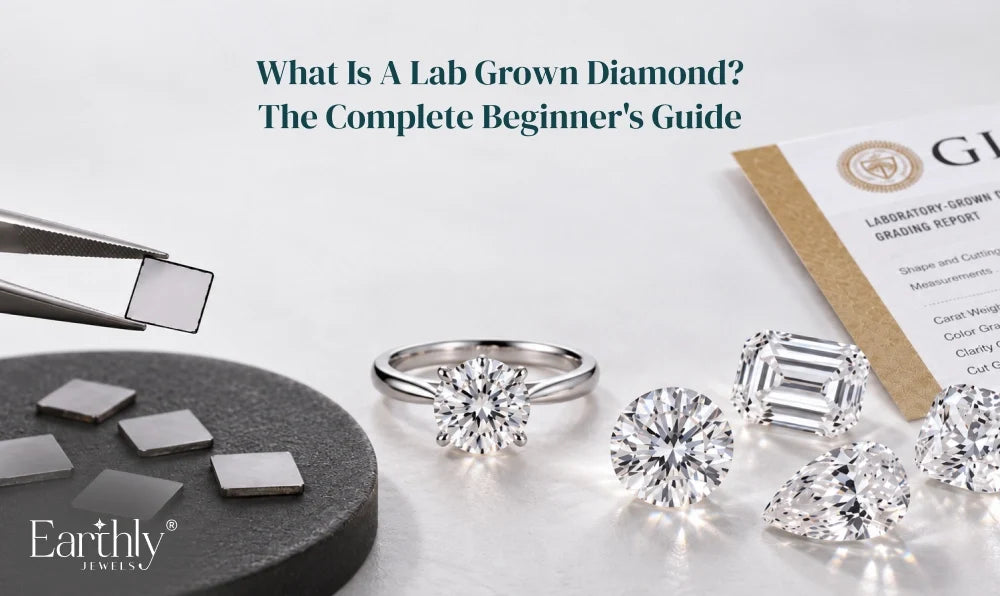
A lab grown diamond is a real diamond produced in a laboratory. Methods such as HPHT and CVD help create these diamonds under controlled conditions. Both lab grown and mined diamonds contain carbon. Keep these important facts in mind.
- Its chemical structure is identical to that of a natural diamond.
- Both types have the same crystal structure and hardness.
- A well-cut diamond sparkles just as brightly.
- Experts evaluate these diamonds by cut, colour, clarity and carat weight.
- Grading report formats may differ between laboratories.
- Unlike cubic zirconia or moissanite, it is a real diamond with a different material composition.
How Is a Lab Created Diamond Made?
Two main methods create most lab grown diamonds today. Both begin with a tiny diamond seed. The seed gives new crystal growth a starting point. Let us look at each method in turn.
The HPHT Method
HPHT stands for high pressure, high temperature. A machine squeezes carbon under intense pressure and heat. This copies the conditions deep inside the earth. Over time, carbon builds up on the seed and forms a rough diamond.
The CVD Method
CVD stands for chemical vapour deposition. A seed sits inside a sealed chamber filled with carbon-rich gas. The gas is heated until carbon atoms settle on the seed. Layer by layer, a rough diamond grows.
After growing, the rough stone goes to a cutter. Skilled craftspeople shape and polish it by hand and machine. A grading lab then reviews the finished gem. From this point, the steps match those used for mined stones.
Lab Made vs Natural Diamonds: Key Differences
Many buyers want a clear side-by-side view. The following table highlights the key differences. It shows general trends, not fixed rules. Individual stones can vary.
| Feature | Lab Grown Diamond | Natural Diamond |
| Origin | Grown in a lab | Formed in the earth over very long periods |
| Chemical makeup | Carbon | Carbon |
| Hardness | 10 on the Mohs scale | 10 on the Mohs scale |
| Grading | 4Cs, by labs such as GIA and IGI | 4Cs, by labs such as GIA and IGI |
| Typical price | Usually lower for similar size and quality | Usually higher |
| Look to the eye | Same sparkle and brilliance | Same sparkle and brilliance |
The biggest differences are origin and price. Looks and hardness are the same. Special equipment is needed to tell the stones apart. Certified stones often carry a tiny laser inscription on the edge.
Lab Grown Diamond Price and Cost Explained
Price is often the first question buyers ask. A lab grown diamond usually costs less than a natural diamond of similar size and quality. Exact figures change by seller, shape and grade. Always compare several stones before you decide.
What Affects Lab Grown Diamond Cost
Several factors shape the final cost of your stone. Some matter more than others. Knowing them helps you spend wisely. These are the main ones to check.
- Carat weight: Larger stones usually cost more per carat.
- Cut quality: A better cut gives more sparkle and often a higher price.
- Colour: Whiter stones generally cost more than warmer ones.
- Clarity: Fewer tiny marks inside the stone usually means a higher price.
- Shape: Some shapes cost more than others.
- Certification: A trusted report makes stones easier to compare.
- Setting and metal: Gold or platinum changes the total ring price.
Smart Ways to Get More Value
A modest budget can still buy a lovely stone. A few simple choices stretch your money further. Focus on what you can see, not just numbers on paper. Try these tips.
- Put cut quality first, because it drives sparkle.
- Choose a colour that looks white once set.
- Pick a clarity grade that looks clean to the eye.
- Compare certified stones from several sellers.
- Set your budget for the whole ring, not only the stone.
Lab Grown Diamond Rings: Styles to Explore
A lab grown diamond ring suits many tastes and budgets. Lab grown diamond rings come in solitaires, halos and many other designs. You can pair them with any metal you like. Here are two popular directions.
Lab Grown Diamond Engagement Rings
Lab grown diamond engagement rings are often chosen for proposals. Many couples appreciate being able to select a larger diamond within their budget. The same settings used for mined diamonds work beautifully here. Pick a style that fits daily life.
- Solitaire: One centre stone with a clean, classic look.
- Halo: Small diamonds circle the centre stone for extra sparkle.
- Three-stone: Three diamonds side by side add a meaningful touch.
- Pavé band: Tiny diamonds line the band for a shimmering finish.
- Hidden halo: Small diamonds sit beneath the centre stone for a subtle glow.
Everyday and Anniversary Rings
Not every ring has to mark a proposal. A lab grown diamond ring can celebrate an anniversary or a personal achievement. Stacking bands and simple solitaires work well for everyday wear. Choose a low setting if your hands are often busy.
Lab Grown Diamond Jewellery Beyond Rings
Rings are only the beginning. Lab grown diamond jewellery now covers almost every style. You can build a full collection over time. Here are the pieces buyers choose most.
- Pendants and necklaces for everyday layering.
- Diamond bracelets, including delicate tennis styles.
- Wedding bands that match an engagement ring.
- Diamond Earrings, which are our next topic.
Lab Grown Diamond Earrings
Lab grown diamond earrings are an easy first purchase. Studs are simple and suit nearly every outfit. Hoops and drops add more movement. These are the styles to know.
- Studs: Small, classic and comfortable all day.
- Halo studs: A ring of tiny diamonds makes the centre look larger.
- Hoops: Diamond-set hoops add a polished touch.
- Drops: Longer styles work well for special occasions.
- Tip: Choose secure backs, such as screw backs, for larger stones.
How To Choose A Lab Grown Diamond With Confidence
A little preparation saves time and money. Know your budget and style before you shop. Then compare stones using facts, not only photos. These steps keep the process simple.
Check the Certificate
A diamond grading report details the stone’s individual qualities. Trusted labs include GIA and IGI. Match the report number to the stone you receive. Ask the seller if anything is unclear.
Common Mistakes to Avoid
Many first-time buyers make the same few errors. Spotting them early protects your budget. Keep this list handy while you shop. Take your time before you pay.
- Buying a stone without a grading report.
- Ignoring cut quality.
- Choosing size over sparkle.
- Skipping the return policy.
- Assuming every seller describes stones the same way.
Caring for Your Lab Grown Diamond Jewellery
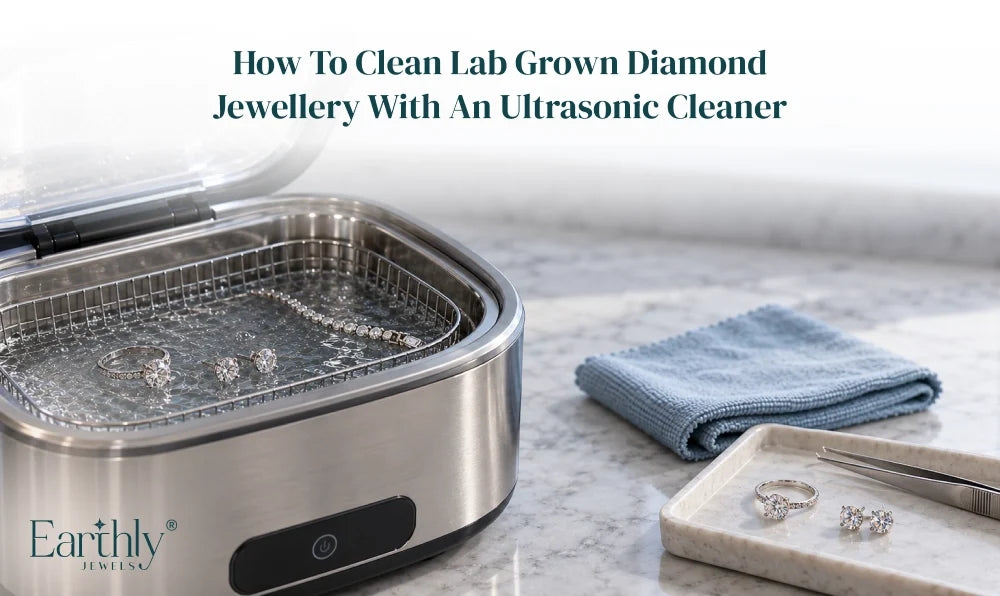
A lab grown diamond is very hard, but it still needs care. Hard knocks can chip any diamond. Dirt and body oils also dull the sparkle over time. These habits keep your pieces bright.
- Soak jewellery in warm water with mild soap.
- Brush gently with a soft toothbrush.
- Rinse well and dry with a soft cloth.
- Remove rings before the gym, cleaning or swimming.
- Store each piece separately to avoid scratches.
- Ask a professional to inspect the settings periodically, especially if the jewellery is worn often.
Key Takeaways
These points sum up the guide. Use them as a quick checklist. Each one links to a decision you will make. Keep them in mind as you shop.
- Origin: Carbon is used to create a lab grown diamond under controlled conditions.
- Identity: It is a genuine diamond, not an imitation.
- History: The year 1954 marked an important milestone in lab grown diamond history.
- Growth: Most diamonds take a matter of weeks to grow.
- Quality:The 4Cs describe every lab grown diamond clearly.
- Report: Read the grading report and match its number to your diamond.
- Price: A lab grown diamond price depends on size, shape and grade.
- Cost: Cut, colour, clarity and carat all drive lab grown diamond cost.
- Rings: Lab grown diamond rings and engagement rings suit every classic setting.
- Earrings: Lab grown diamond earrings are a simple, versatile way to start.
- Jewellery: Pendants, bracelets and bands complete a lab grown diamond jewellery collection.
- Care: Clean gently and store each piece apart.
Conclusion
A lab grown diamond offers real beauty, clear grading and wide choice. Understanding lab grown diamond price and cost helps you plan with confidence. Read the report, judge the cut and set a clear budget. With those steps, your ring or earrings will feel like a wise choice.
Learn how lab grown diamonds are created and graded before exploring engagement rings. Discover everyday rings and earrings that suit your style. Check independent grading reports for centre diamonds and product specifications for smaller stones. Take your time, ask questions and choose a design you will love for years.
Frequently Asked Questions
These answers cover the questions shoppers ask most. Each one is short and direct. They add detail to the sections above. Use them as a quick reference.
Is a lab grown diamond a real diamond?
Yes. It has the same carbon makeup and crystal structure as any diamond. Trusted labs grade it on the 4Cs.
Are lab created, lab made and man made diamonds the same?
Yes. Lab created diamonds, lab made diamonds and man made diamonds are names for diamonds grown by people. All are graded on the 4Cs. Check the report for details.
Can a diamond tester identify a lab grown diamond as real?
Many standard testers read it as diamond. That is because it is diamond. Ask for a report if you want proof.
What decides a lab grown diamond ring price?
Carat, cut, colour, clarity and metal all play a part. Shape and certification matter too. Compare certified diamonds from several sellers.
Are lab grown diamond engagement rings worth considering?
Many couples choose them for beauty and choice. Check the grading report and cut quality. Pick a setting that suits your daily life.
Are lab grown diamond earrings good for daily wear?
Yes, studs are a popular daily choice. They are comfortable and easy to style. Choose secure backs for extra peace of mind.
Do lab grown diamonds come with certificates?
Many do, from labs such as GIA and IGI. The report lists the main qualities of the diamond. Always match the report number to your diamond.


Share:
How to Clean Lab Grown Diamond Jewellery With An Ultrasonic Cleaner