


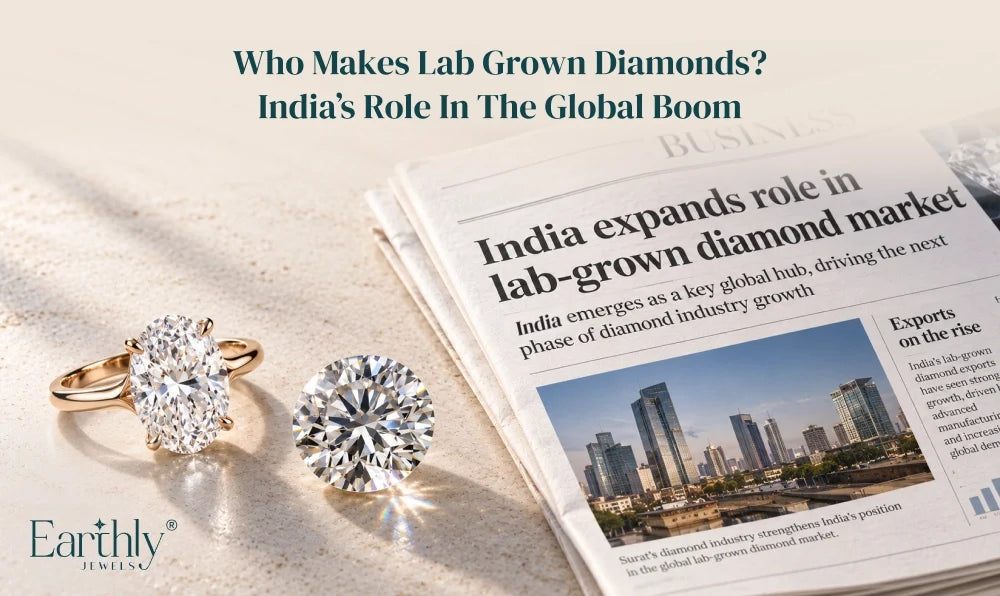
Who actually makes a lab grown diamond? The answer is a handful of factory hubs, mostly in Asia and the United States. People often search “lab grown diamonds india” to see where the country stands. This guide gives that answer in plain words, with figures from Indian trade data.
India has a special place in this trade. Indian exporters sent out about 18.8 million carats of polished lab grown diamonds in 2025-26. That volume passed polished natural diamond exports by carat weight for the first time. The milestone makes this topic worth a closer look.
Price comes next. We outline lab grown diamond prices in India using approximate ranges in rupees. You will also learn how to judge a seller and what each ring style offers. Every price here is a guide and not a quote.
India’s Place Among Lab Grown Diamond Makers
India stands among the leading makers of lab grown diamonds. It grows rough diamonds, cuts them, and sets them in jewellery. Most steps of the chain can happen at home, from growing to selling. The sections below show how that chain works.
India Grows, Cuts, and Polishes
India is widely recognised as one of the world’s leading lab grown diamond producers, generally ranking behind China. Its estimated global production share varies by year and source. Many Indian growers use the CVD method. Lab grown diamonds India grows often get cut and polished in the same country.
- Volume: India exported 18.8 million carats of polished ones in 2025-26.
- Comparison: Polished natural exports stood at 16.0 million carats.
- Value: Lab grown export value fell 10.6 percent to about US$1.1 billion.
- Jewellery: Exports of studded jewellery with lab grown diamonds grew 31.3 percent.
- Recent trend: April to September 2026 polished exports rose 17 percent in dollars.
How India’s Lab Grown Diamond Supply Chain Works
A diamond passes through many hands before it sits in a ring. Each hand adds skill and cost. Knowing the path helps you read a price tag. Here is the usual route in India.
- Growers: Factories produce rough diamonds of many sizes.
- Cutters: Skilled workers plan, cut, and polish each rough diamond.
- Graders: Laboratories test each polished diamond and issue a report.
- Jewellers: Craftspeople set diamonds in gold or platinum.
- Retailers: Stores and websites sell the finished piece.
Why Surat Leads Lab Grown Diamond Cutting and Polishing
Surat is a major centre for diamond cutting and polishing in India. The city handles a large share of the country's diamond processing work. Surat's lab grown diamonds reach jewellery markets across India and overseas. Mumbai also plays a significant role in the diamond trade.
Why Surat Works So Well
- Skills: Many workers there learned diamond cutting over many years.
- Closeness: Dealers, factories, and testing labs sit near one another.
- Contacts: Old trade links connect the city to buyers overseas.
HPHT and CVD: What Buyers Should Know
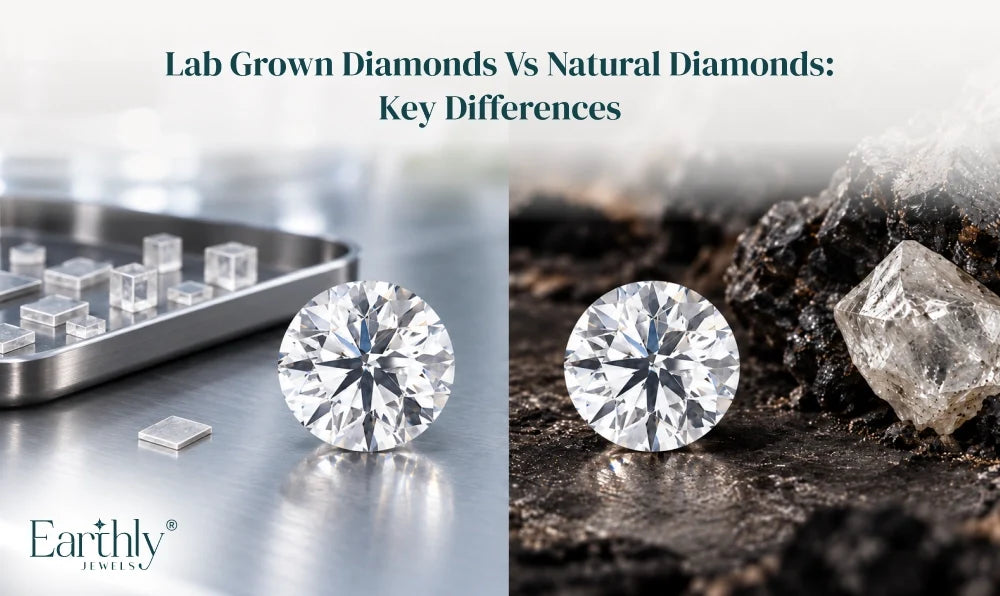
Both processes give real diamonds. One is not better than the other. Many reports state which method was used. Judge a diamond by its grades and cut.
Government Support for Indian Growers
Policy has backed Indian growers. Budget 2023-24 cut the customs duty on lab diamond seeds from 5 percent to nil, under set conditions. It also gave IIT Madras approximately ₹242 crore over five years for local seed and machine research. India aims to depend less on imports.
What the Export Boom Means for Buyers
Big export numbers affect what you pay and what you can find. Large volumes mean many sellers compete for your order. A 31 percent rise in carats, paired with lower value, points to cheaper diamonds. Rising diamond jewellery exports show that finished pieces are in demand too.
- Choice: Many growers and cutters mean more sizes and shapes to compare.
- Pricing: Lower rough costs can reach shoppers as sharper quotes.
- Caution: Cheap does not mean good, so still read the report.
Other Countries in the Lab Grown Diamond Trade
India is not the only maker. China, the United States, Singapore, and parts of Europe and the Middle East also grow lab grown diamonds. Each plays its own role in global trade. The table shows where they stand next to India.
| Country | Main strength | Common method |
| India | Growing, cutting, and polishing | CVD |
| China | Largest growing volume | HPHT |
| United States | Research and strong buyer demand | Varies |
| Singapore and others | Newer growing hubs | Varies |
The Biggest Growers by Volume
China grows the biggest share of the world’s lab grown diamond. Estimates range from about half to well above half, so no single figure is final. Most Chinese factories use the HPHT method, and Henan province is a major centre. Cheap, plentiful supply from China helped push global prices down.
- Output: Estimates run to millions of carats a year.
- Method: Many factories use HPHT technology to grow diamonds.
- Effect: Bigger supply has lowered prices for buyers everywhere.
Early Pioneers and Newer Hubs
General Electric researchers produced the first widely recognised lab grown diamonds in 1954. American producers still grow diamonds, and US shoppers anchor global demand. Singapore and the Middle East have newer growers. A few European firms also grow diamonds.
Lab Grown Diamond Companies in India
Lab grown diamond companies in India do different jobs. Some grow diamonds, some cut them, and some design jewellery. Big firms often do several jobs at once. Knowing who does what helps you question a quote.
- Growers: They produce rough diamonds for cutters and exporters.
- Exporters: They polish diamonds and sell to trade buyers abroad.
- Brands: They turn polished diamonds into finished pieces for Indian shoppers.
- Online sellers: They list loose diamonds and jewellery with reports.
How to Spot the Best Lab Grown Diamonds India Sellers Offer
Good sellers answer questions without delay. To find the best lab grown diamond options offered by shops in India, compare facts and ignore slogans. Ask for the report, the exact weight, and the return rules. Then run through this checklist.
- Report: Ask for a report from a known laboratory, such as IGI.
- Match: Check that the listing matches the report on weight and grades.
- Quotes: Collect at least three price quotes per carat.
- Terms: Keep return and exchange rules in writing.
- Metal: Confirm gold purity and hallmark on finished jewellery.
What Lab Grown Diamonds Cost in India
Quotes differ because sellers grade and price differently. The lab grown diamonds price in India depends on size, grade, shape, and seller. Export data show prices eased through 2025-26. The table gives approximate loose prices quoted by Indian retailers.
| Size | Approximate loose price | What moves the price |
| 1 carat | ₹35,000 to ₹1,20,000 | Colour, clarity, cut, shape |
| 2 carat | ₹70,000 to ₹2,00,000+ | Grade, shape, seller margin |
| Finished ring | Above the loose price | Metal, design, making charges |
1 Carat Lab Grown Diamond Price in India
One carat is where many ring searches begin. Approximate loose prices for a certified 1 carat diamond run from ₹35,000 to ₹1,20,000. Higher grades and sharper cutting move you up that range. Rings cost more because gold and labour join the bill.
2 Carat Lab Grown Diamond Price in India
Two carats make a bolder look on the hand. Approximate loose prices for a certified 2 carat diamond run from ₹70,000 to ₹2,00,000 or more. Per-carat rates often rise as size grows. Get three quotes and match each report to the diamond.
Why Similar Diamonds Carry Different Prices
Weight is only the first step in a quote. Five more details shift the number. Check each before comparing totals. Small gaps add up fast.
- Colour: Whiter diamonds usually cost more than slightly tinted ones.
- Clarity: Fewer tiny marks inside usually lifts the price.
- Cut: A sharper cut returns more light and often costs more.
- Shape: Round diamonds often cost more than fancy shapes of equal weight.
- Seller: Margins and report providers differ from shop to shop.
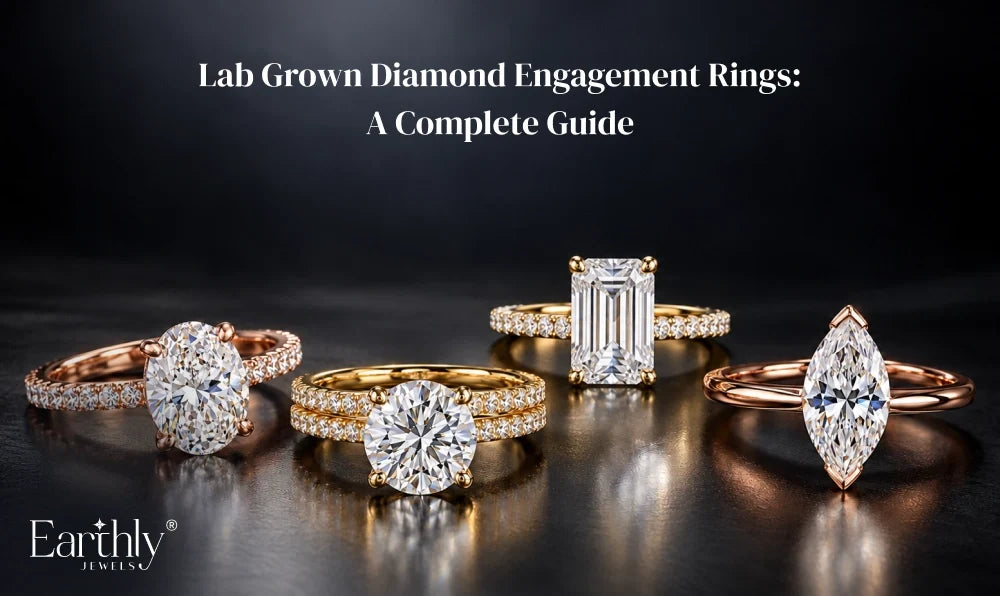
Lab Grown Diamond Rings in India for Every Occasion
Rings show the full range of choice. Lab grown diamond rings India stores sell run from thin bands to bold solitaires. Brands such as Earthly Jewels also offer earrings, necklaces, and bracelets set with lab grown diamonds. Choose a style that suits your hands and your routine.
- Solitaire ring: A single centre diamond keeps the focus on the diamond itself.
- Halo ring: A ring of small diamonds makes the centre look larger.
- Three-diamond ring: Three diamonds stand for past, present, and future.
- Eternity band: Diamonds all around the band suit an anniversary gift.
- Couple rings: Matching bands let partners share one design.
Lab Grown Diamond Jewellery in India Beyond Rings
Lab grown diamond jewellery in India now spans every category. Studs and pendants usually cost less than rings. Export data show strong growth in studded jewellery with lab grown diamonds. Sellers also offer sets for weddings and gifts.
- Solitaire Earrings: Studs work for office days, and drops work for parties.
- Pendants with Diamond: One diamond on a thin chain pairs with most outfits.
- Lab Created Diamond Bracelets: Tennis bracelets add shine to both casual and formal looks.
- Diamond Necklaces: Layered chains let you add pieces over time.
Smart Ways to Shop for Lab Grown Diamond
A clear plan beats a long search. Set the budget first, then pick the size and style. A well-cut diamond often looks better than a heavier, poorly cut one. These steps keep you on track.
Set a Budget Before You Browse
Decide the full amount, including the setting. Gold, design work, and labour all add to the bill. Ask each seller for a price breakup. Then compare offers line by line.
- Diamond: Pay for the diamond and its report.
- Setting: Metal weight and design change the final cost.
- Extras: Ask about resizing, insurance, and cleaning.
Key Takeaways
- Makers: India ranks among the top growers and stands out in finishing.
- Methods: China commonly uses HPHT, while many Indian growers use CVD.
- Exports: India shipped 18.8 million carats of polished lab grown diamonds in 2025-26.
- Surat: The city leads India’s cutting and polishing work.
- Policy: Duty-free seeds and IIT Madras research back local growth.
- Companies: Indian firms range from growers to exporters to jewellery brands.
- Budget: The 1 carat lab grown diamond price in India varies widely by grade.
- Quotes: Collect three prices per carat before choosing a seller.
- Reports: Match the grading report to the exact diamond you buy.
- Jewellery: Studs and pendants usually cost less than rings.
Conclusion
Lab grown diamonds India grows, cuts, and sells now reach buyers in many countries. India ranks among the top growers and stands out in finishing and polished exports. Your best move is to compare reports and quotes from several sellers. With those checks done, you can choose a diamond that fits your budget.
India’s story is still unfolding. Prices have eased, exports keep rising, and more jewellery brands now use lab grown diamond. Watch grading reports and fresh quotes as the market moves. A little research today can save real money later.
Frequently Asked Questions
Which country is a major producer of lab grown diamonds?
China leads global production, with manufacturers using HPHT and CVD techniques. India also has a strong industry that supplies diamonds to international markets.
Are lab grown diamonds produced in India?
Yes, Indian facilities create diamonds under controlled conditions, often using CVD technology. Surat is a major cutting and polishing hub, while Mumbai plays an important role in trading, jewellery business and exports.
What budget should I keep for a 1-carat lab grown diamond in India?
A loose 1-carat diamond may fall within ₹35,000 to ₹1,20,000. Its specifications and the retailer's pricing determine the amount you pay.
What role does Surat play in India's lab grown diamond trade?
Surat supports the industry through its extensive network of diamond-processing workshops. Skilled workers shape rough diamonds into polished pieces for jewellery manufacturers and retailers.
Do lab grown diamonds have the same structure as mined diamonds?
Yes, both types consist of carbon arranged in the diamond crystal structure. A grading report can provide information about a diamond's characteristics and origin.
How are diamonds made through HPHT different from CVD diamonds?
HPHT recreates the pressure and heat associated with diamond formation. CVD develops diamond material through a controlled process involving carbon-containing gases.
How can I verify a diamond grading report?
Start by checking whether a recognised gemmological laboratory issued the report. Use its report number to confirm the recorded details match your selected diamond.
Why might a lab grown diamond cost less than a mined diamond?
Laboratory production follows a different supply process from natural diamond mining. Prices still vary with individual diamond characteristics, retailer costs, and market conditions.
What should I check when ordering lab grown diamond online in India?
Review the diamond specifications, available grading documents, and the seller's business details. Read the return and refund conditions before completing your purchase.

Share:
Lab Grown Diamond Engagement Ring: A Complete Guide