


Picture two diamond rings on a velvet tray. One came from deep in the earth, and the other grew in a lab. Could you guess which is which? Most people cannot, and that is the heart of the story behind lab created diamonds.
Even so, a few doubts still float around. You may have heard words like fake, copy or cheap. Where do these ideas come from? Mostly from a time when few people knew how these diamonds really work.
This guide walks through the biggest worries one at a time. You will also pick up easy ways to judge the quality of diamond jewellery. We look at solitaires, studs, pendants and more. By the end, you can shop calmly.
So, What Exactly Are Lab Created Diamonds?
Lab created diamonds are true diamonds, built from carbon atoms locked in the classic diamond pattern. A lab simply gives that pattern a place to grow. Nothing is painted on, coated or mixed with another material. Take a ring to any gem tester, and it reads as diamond.
Names You Will Meet While Shopping
Different shops use different labels. You might read lab grown diamonds on one tag and man made diamonds on the next. All of them describe the same product. Think of it like one fruit with two local names.
- Lab grown diamonds: common in stores and online listings.
- Lab created diamonds: the label many guides use.
- Man made diamonds: a plain name that people often search for.
Two Growth Methods Behind the Name
Labs grow diamonds with two main methods. They are called HPHT and CVD. Both can make gem-quality diamonds. A method is a growing technique, not a grade or a brand.
- HPHT: short for high pressure, high temperature, which copies the heat and squeeze found underground.
- CVD: short for chemical vapour deposition, which builds a diamond from carbon-rich gas.
Common Worries About Lab Created Diamonds, Answered
Worries tend to grow when facts are hard to find. Let us take the common ones one at a time. Each answer is short and based on how diamonds behave in real life. Jump to any point that matters most to you.
Fact 1: A Lab Diamond Is a True Diamond
Lookalikes such as cubic zirconia or glass are different materials. A lab diamond is not one of them. It holds the same carbon pattern as a natural diamond. A standard diamond tester reads both as diamond.
- The same carbon pattern sits inside.
- It passes a standard diamond tester.
- It is not a coating, glass or plastic.
Fact 2: Four Cs Shape the Quality
A diamond's beauty is judged on four Cs: cut, colour, clarity and carat. Cut shapes the sparkle, while colour, clarity and carat set the look and size. Natural and lab diamonds are graded on these same four traits. So the quality of diamond in your ring comes from its Cs, not its birthplace.
- Cut: how well the shape and finish bring out sparkle.
- Colour: how clear or tinted the diamond looks.
- Clarity: how few tiny marks you can find inside or on the surface.
- Carat: the weight of the diamond, which guides its size.
Fact 3: They Resist Scratches With Simple Care
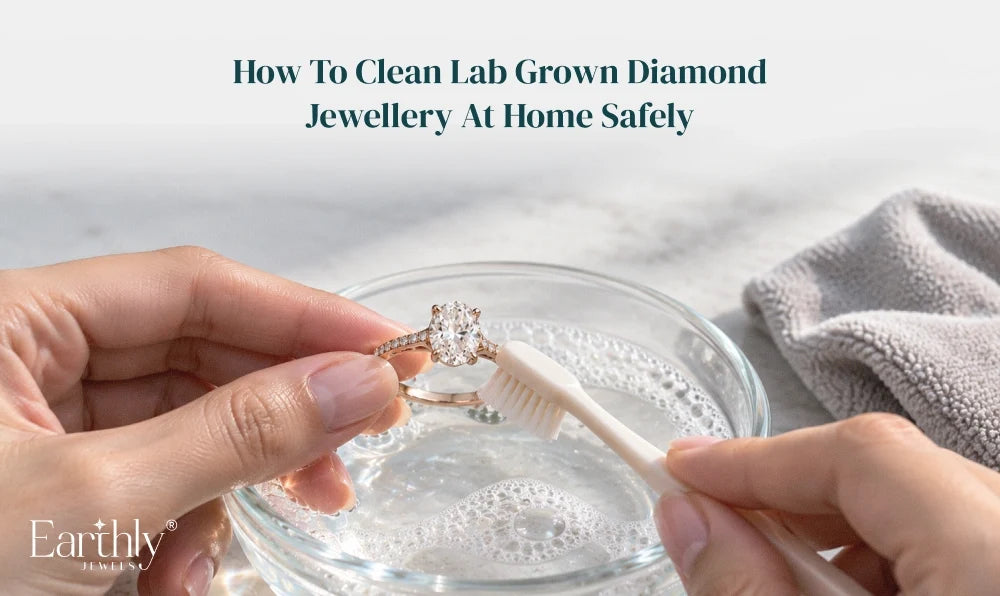
Diamonds rank at the top of the hardness scale, so they resist scratches very well. Hard is not the same as unbreakable. A strong knock on an edge can still chip a diamond. Dirt also dulls the shine, so regular cleaning matters.
Fact 4: They Look Alike to the Eye
Put the two side by side, and you will see the same fiery sparkle. Experts need special machines to spot a difference. Your guests will simply admire the shine. Most people cannot tell by looking.
- It handles everyday wear and minor scratches well.
- A hard hit near an edge can cause it to chip.
- Regular, gentle cleaning helps it stay bright.
Quick Facts on the Look
- Both flash the same white light.
- They display the same tiny colours.
- Their glow remains the same in sunlight and lamplight.
- In photos, both sparkle equally.
Fact 5: Reports Are Available for Many Centre Stones
Trusted sellers often supply a report from an independent grading lab for larger centre stones. Smaller diamonds, such as those in studs or bands, may not each carry their own. Ask what paperwork comes with your piece before you pay. A seller who answers clearly is a good sign.
- For eligible centre stones, it names the shape and size.
- It notes the cut, colour and clarity grades.
- Smaller diamonds may be described in the piece's overall details.
Fact 6: Every Piece Can Feel Personal
A lab starts the diamond, but a designer shapes the jewel. Metal, setting and style are all your choice. Many jewellers also take custom requests. So your piece can be one of a kind.
- Pick the metal colour you love.
- Choose a ring, stud, pendant or bracelet.
- Add an engraving or a special shape.
Fact 7: They Bring Joy at a Fair Price
Worth is personal. For many people it means beauty, comfort and a calm mind. A lab diamond can offer all three without a huge price. See it as a gift for your story, not a trade item.
- Enjoy a larger diamond within your budget.
- Experience lasting sparkle every day.
- Make a confident choice with clear, reliable information
Fact Snapshot
| Topic | Fact |
| Identity | A true diamond with the carbon diamond pattern |
| Quality | Judged by cut, colour, clarity and carat |
| Strength | Scratch-resistant, though it can still chip |
| Look | Sparkles like a natural diamond |
| Reports | Often available for eligible centre stones |
| Style | Open to any design |
| Worth | Beauty and comfort at a fair price |
Lab Grown Diamonds and Natural Diamonds in Real Life
Words only go so far, so let us look at lab grown diamond vs natural diamond traits side by side. This table covers what you can see and what happens behind the scenes. Look for where the two match and where they part ways. You will notice that most rows match.
| Trait | Lab Grown | Natural |
| Chemical makeup | Carbon | Carbon |
| Crystal structure | Diamond lattice | Diamond lattice |
| Hardness | Top of the hardness scale | Top of the hardness scale |
| Sparkle | Very similar | Very similar |
| Growth origin | Grown in a lab, in weeks | Formed underground, over long ages |
| Growth process | HPHT or CVD methods | Natural heat and pressure |
| Price | Often lower for a similar size and grade | Often higher for a similar size and grade |
| Identification | Special lab tools can tell them apart | Special lab tools can tell them apart |
The table shows a close match in how the diamonds look and perform. The clear gaps are growth origin, growth process and price. Trace elements and growth patterns show up only under special lab tools. Weigh these points against your own values and budget.
- Choose lab grown if you want a bigger size for your money.
- Pick natural if the story of the earth moves you.
- Either choice can last for decades with good care.
How to Judge the Quality of Diamond Jewellery
A simple shop visit can teach you a lot. You need good light, patience and a few smart questions. Look first, then ask about the setting and the papers. The steps below keep things easy.
Signs of a Good Quality Diamond
A good quality diamond wakes up in sunlight. It throws white flashes and tiny colours as you tilt it. The outline looks even, and the surface looks clear. If it looks flat or glassy, ask your seller about it.
- Watch for lively sparkle, which points to a strong cut.
- Check that the colour looks clear and even in daylight.
- Look closely for dark or cloudy spots, which show clarity.
- Compare the carat weight with the size you see.
- Ask if the centre stone has a report from an independent lab.
Check the Setting and Metal
A fine diamond needs a firm home. Prongs should grip the diamond with no wobble. The metal should feel smooth, with no rough edges. A solid setting keeps your diamond safe for years.
- Prongs should feel tight and even.
- The surface should feel smooth to touch.
- The band should sit comfortably on your finger.
Why a Lab Grown Solitaire Diamond Suits Modern Buyers
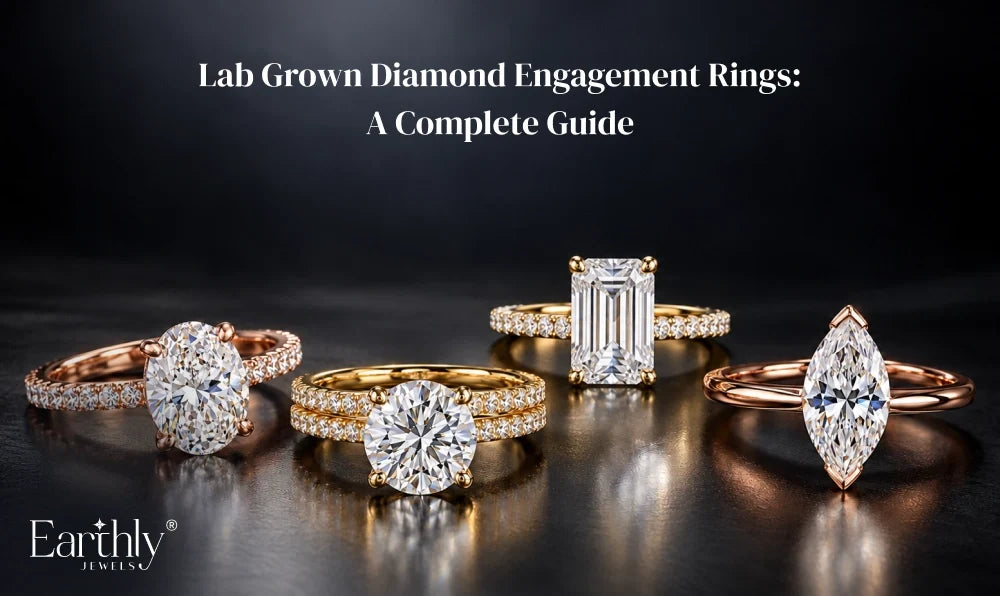
A solitaire is one diamond with nothing else to hide behind. That makes it graceful, simple and easy to wear daily. A lab grown solitaire diamond often gives you a bigger centre without a bigger spend. Many couples like this for engagement and anniversary rings.
Popular Solitaire Looks
Round solitaires remain the timeless pick. Oval and pear shapes can make fingers look longer. Emerald and radiant cuts bring a clean, modern feel. Choose the shape that suits your hand.
- Classic Prong Diamond Solitaire Rings: lift the diamond high so it catches more light.
- Bezel Diamond Solitaire Rings: hug the diamond in metal for a snug, safe hold.
- Hidden Halo Diamond Solitaire Rings: add a soft glow under the centre diamond.
- Tapered Band Diamond Solitaire Rings: lead the eye straight to the centre.
Where Lab Created Diamonds Shine Beyond Rings
Diamonds look lovely on ears, necks and wrists too. Each piece fits a different mood and moment. Here are the everyday favourites that many shoppers pick first. Choose one, or grow your set over time.
- Lab Diamond Stud Earrings: small, sparkly and easy for work days or quiet evenings.
- Lab created diamond Pendants and Necklaces: a single pendant that catches light suits most necklines.
- lab grown Diamond Tennis Bracelets: a smooth line of sparkle for dressy or casual looks.
- Man made Diamond Mangalsutras: fresh designs that keep tradition close.
- Initial Diamond Pendants: personal pieces with a name or a favourite letter.
- Men's Diamond Rings: clean, bold styles for daily wear and special days.
Why More Buyers Choose Man Made Diamonds
Price is only part of the picture. Buyers today also care about clarity, comfort and design. They want to know what they are buying and why. Man made diamonds answer these needs with ease.
A Story You Can Trace
Many buyers like knowing where their diamond began. A lab keeps neat records at every step. That helps a seller share the full story with you. Knowing it adds quiet joy to the purchase.
- Records are easy to share.
- The path of the diamond is clear.
- Clear facts build trust.
More Room in Your Budget
Your money can stretch further with lab diamonds. A bigger centre or a finer setting often fits the same budget. Some buyers use the extra to add matching earrings. Careful spending lets you own more lovely pieces.
- Go for a bigger centre diamond.
- Upgrade to a finer metal or setting.
- Add a matching pair of studs.
Space for Your Own Style
Extra budget opens the door to fun choices. You can pick rose gold, yellow gold or platinum. You can ask a jeweller for a shape no one else wears. Small touches make the piece truly yours.
- Pick your favourite metal colour.
- Try a rare shape or setting.
- Add a name or date engraving.
Three Expert Tips for Smart Diamond Buyers
Jewellery experts often repeat the same few rules. Following them saves time and money. They also help you buy with a clear head. These three matter the most.
- Look at the cut first. A smart cut gives more sparkle than extra carat weight.
- Ask about reports. For a centre stone, an independent lab report shows what you are buying.
- Think long term. A classic design stays stylish for decades.
Key Takeaways
- True: A lab diamond is a real diamond with the same carbon pattern inside.
- Equal: It looks, feels and sparkles like a natural one.
- Tough: It resists scratches well, but it can still chip and needs regular cleaning.
- Quality: Cut, colour, clarity and carat shape how good a diamond looks.
- Reports: Ask if your centre stone has an independent lab report.
- Setting: A firm setting keeps your diamond safe.
- Budget: Your money can buy a bigger size or finer design.
- Range: Rings, studs, pendants and bracelets all come in lab created diamonds.
- Care: Soft cleaning keeps every piece glowing.
- Calm: Facts help you choose without fear.
Conclusion: Clear Facts Lead to Confident Choices
Lab created diamonds are real, tough and lovely to wear. They match natural diamonds in everything you can see and touch. Worries about fakes and low worth fade once you know the facts. Where a diamond grows is part of its story, and its sparkle is yours to enjoy.
Your next move is easy. Look closely, ask about the report and choose a setting that feels right. A solitaire, a pair of studs or a pendant could be waiting for you. Trust the facts, and wear your diamond with joy.
FAQs
Are lab grown diamonds real diamonds?
Yes, they share the same chemical makeup and crystal structure as natural diamonds. Their physical and optical traits are very similar too. They differ in how and where they grow.
What signs show a diamond was cut with care?
Hold it under a bright lamp and look for even, lively flashes. Dull patches or a washed-out centre point to a weak cut. A trusted jeweller will gladly explain any report that comes with it.
Will a lab diamond stay shiny for years?
Yes, it can stay shiny for years with good care. It resists scratches very well, though a hard knock can still chip it. Gentle, regular cleaning keeps the sparkle fresh.
Can a lab grown solitaire diamond be the centre of an engagement ring?
Absolutely, many couples now choose one for their proposal. The money you save can go into a larger centre or finer metal. Choose a firm setting so it stays secure through daily life.
Is a lab diamond the same as cubic zirconia?
No, cubic zirconia is a different material that only looks like a diamond. A lab diamond is a true diamond. It also keeps its shine much longer than lookalikes.
Does a lab diamond come with a report?
Many centre stones do, from an independent lab. Smaller diamonds in studs or bands may not have their own. Ask your seller what paperwork comes with your piece.
Can I wear lab diamond jewellery every day?
Yes, but take it off for heavy work or sports to avoid knocks. Clean it gently and keep it in a pouch. Ask a jeweller to check the prongs once a year.
Can I find a good quality diamond if my budget is small?
Often you can, since lab diamonds cost less than natural ones of similar size. Put your money into the cut and a safe setting first. Choose a smaller size rather than settle for a dull finish.


Share:
How to Choose the Best Online Store for Lab Grown Diamond Jewellery
How to Clean Lab Grown Diamond Jewellery With An Ultrasonic Cleaner