


Black diamonds look bold, modern, and a little mysterious. They are real diamonds, but their dark colour comes from a different source than white ones. That difference shapes how they look, how much they cost, and how you care for them. This guide explains each type in plain words so you can choose with confidence.
Many shoppers look up the black diamonds before they ask about the cost. Others want a clear answer to what is a black diamond and how it forms. You will find both answers below, plus honest pros and cons. We also cover rings, earrings, and simple care habits.
Today you can buy natural, treated, and lab grown black diamond options. Each one looks similar at first glance but differs in origin and price. Lab grown diamonds are real diamonds with essentially the same crystal structure as mined ones. By the end, you will know which type fits your budget and style.
What Is a Black Diamond?
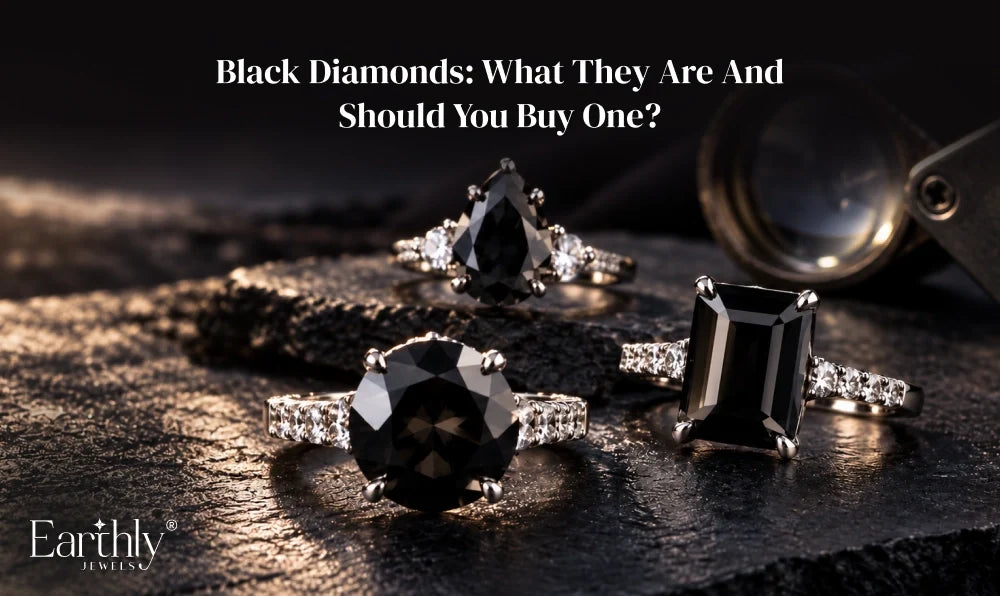
A black diamond is a diamond that looks dark and opaque instead of clear. The surface gives off a deep, glossy shine, almost like polished metal. The black colour can come from nature, treatment, or the growth process. Three main types appear in shops, as listed below.
- Natural Diamond: Formed underground, with dark graphite or mineral inclusions giving the colour.
- Treated Diamonds: A low grade natural diamond darkened with heat or radiation.
- Lab grown Diamonds: Grown in a lab, with colour from growth conditions or added treatment.
Black Diamond Meaning and What It Stands For
Meaning depends on culture, personal taste, and jewellery tradition. Many people link the colour with strength, protection, and quiet confidence. These are beliefs and style ideas, not scientific facts. Here are the ideas people mention most often.
- Strength: Dark colour often stands for resilience and a firm will.
- Protection: Some traditions treat black as a shield against bad luck.
- Mystery: The deep, glossy look suggests depth and hidden stories.
- Individuality: It suits people who like a bold twist on tradition.
How Black Diamonds Get Their Colour
Colour in these diamonds works differently from colour in white ones. White diamonds are prized for clarity, while dark ones depend on inclusions. The cause of the colour also changes the price and the care needed. Let us look at each type in turn.
Natural Black Diamond Colour
Nature creates this colour deep underground, where graphite and minerals get trapped in the crystal. These dark inclusions are dense, so light cannot pass through. Many also contain tiny fractures, which may make them more prone to chipping. Labs such as GIA describe their colour as Fancy Black.
Treated Black Diamond Colour
Treated pieces start as natural diamonds with many cracks and low clarity. High-temperature treatment can darken existing fractures through graphitization, while heavy irradiation can create a very dark colour that appears black.
This process is common and accepted when sellers disclose it. Treated pieces usually cost less than natural ones, which makes them popular.
Lab Grown Black Diamond
A lab grown black diamond is made in a lab, not mined from the earth. Lab grown diamonds share the same basic chemistry and crystal structure as natural ones.
Their dark colour can come from growth conditions, added defects, or later treatment. Ask the seller to confirm which method was used.
Natural, Treated, and Lab Grown diamond Side by Side
A quick table makes the three types easier to compare. Use it as a starting point before you shop. Details vary by seller and by each individual diamond. Always ask for a written report to confirm what you are buying.
| Feature | Natural Diamond | Treated | Lab Grown Diamond |
| Origin | Formed in the earth | Natural diamond, colour changed | Grown in a lab |
| Source of colour | Dark inclusions | Heat or radiation | Growth conditions or treatment |
| Typical cost | Highest | Lower than natural | Often lower than natural |
| Suits | Collectors | Budget-minded buyers | Modern, value-focused buyers |
Why Many Buyers Choose Lab Grown
Some buyers consider lab grown black diamond for their price, appearance, and laboratory-grown origin. A lab grown black diamond offers the same dark, glossy look with a clear origin. Reports for these diamonds state plainly that they were grown in a lab. Here are the reasons buyers mention most.
- Origin: The report names the diamond as lab grown, so there is no guesswork.
- Budget: Costs are often lower than for natural pieces of similar size.
- Choice: Makers can produce a wide range of sizes and shapes.
- Mining: No mining is involved, which matters to many shoppers.
Black Diamond Price: What Affects the Cost
Black diamond price changes widely, so no single figure fits every piece. Natural ones usually cost more, because natural black colour is rarer. Treated and lab grown choices often cost less for the same size. These factors move the final cost most.
- Type: Natural, treated, or lab grown colour changes the starting point.
- Size: Larger diamonds cost more, even when the colour is common.
- Cut and finish: A clean polish and even shape raises the value.
- Report: A lab report confirming origin supports a fair price.
- Setting: Gold or platinum and the design adds to the total.
Black Diamonds Jewellery Styles
Black diamonds jewellery works for daily wear and for dressy evenings. The deep colour pairs well with yellow, white, and rose gold. It also adds contrast beside white diamonds in mixed designs. Simple settings let the dark colour take centre stage.
Black Engagement Diamond Ring
A black engagement diamond ring suits couples who want a break from tradition. Solitaire settings keep the focus on the dark centre diamond. Halo designs add a ring of white diamonds for strong contrast. Two-tone bands with white and black diamond accents add another bold choice.
Earrings, Pendants, and Bracelets
Smaller pieces are a gentle way to try the colour. They pair easily with both casual and festive outfits. Many buyers start with one piece and add more later. Here are easy pieces to start with.
- Stud earrings: Small, sleek, and easy for daily wear.
- Pendants: A single dark centre makes a clean focal point.
- Tennis bracelets: Alternating black and white diamonds create a bold rhythm.
- Stackable rings: Thin bands mix well with other metals.
Styling Dark Diamond Pieces
Dark diamonds look strongest when the rest of your outfit stays simple. Pair a black diamond pendant with a plain neckline for a clean effect. Mix metals with care, and let one piece be the star. These quick ideas work for most wardrobes.
- Office: Wear small studs with neutral clothing.
- Festive: Match a dark pendant with rich silk or deep jewel tones.
- Evening: Layer a tennis bracelet with a simple black dress.
Pros and Cons of Black Diamonds
Every choice has trade-offs, and this one is no exception. Knowing both sides helps you decide without regret. The lists below stay honest and simple. Use them to match the diamond to your daily life.
What Buyers Like
- A bold, modern look that stands apart from white diamonds.
- A wide price range that suits different budgets.
- Easy pairing with every metal colour.
- Simple mixing with white diamonds in one design.
What to Weigh Carefully
- Heavy inclusions may make some diamonds prone to chipping.
- Treated colour needs clear disclosure from the seller.
- The look is glossy and dark rather than bright and fiery.
- Resale value is not guaranteed and varies by type and market.
Common Myths About Dark Diamonds
A few myths make shoppers nervous about dark diamonds. Most worries come from mixing up colour with quality. Clearing them up makes shopping easier and calmer. Here are the facts behind three common ideas.
- "They are fake": Natural, treated, and lab grown versions all use real diamond material.
- "Treated means worthless": Treated black diamonds can be legitimate jewellery choices when the treatment is clearly disclosed and reflected in the price.
- "Lab grown means weak": A lab grown diamond has the same hardness as a mined one.
Should You Buy a Black Diamond?
The answer depends on your taste, budget, and plans for daily wear. If you love bold design, black diamonds can be a joyful pick. If you want maximum sparkle, a white diamond may please you more. There is no wrong answer, only a better fit.
A Good Fit If You
- Prefer a modern, understated look over classic brilliance.
- Want a distinctive ring or pendant that few others own.
- Like mixing dark and light diamonds in one piece.
Think Twice If You
- Expect the same fiery sparkle as a colourless diamond.
- Plan to resell the piece for a high return.
- Need a very low-maintenance piece for heavy daily work.
How to Buy With Confidence
Smart buying starts with the right questions. Reputable sellers answer them without hesitation. Ask for proof in writing before you pay. These steps keep the process simple.
- Ask whether the colour is natural, treated, or lab grown.
- Request a report from a trusted lab where possible.
- Compare size, cut quality, and finish across a few options.
- Check the metal type and hallmark.
- Read the return and warranty policy.
Simple Care Tips for Dark Diamonds
Black diamonds need gentle care, since inclusions can create weak spots. Wipe each piece with a soft cloth after wearing it. Clean it with mild soapy water and a soft brush. Follow these habits to keep it safe.
- Skip ultrasonic and steam cleaners unless your jeweller approves them.
- Remove rings before sports, gardening, or heavy chores.
- Store each piece in its own pouch to prevent scratches.
- Have the setting checked periodically, especially if the jewellery is worn often.
Key Takeaways
- Types: Black diamonds come as natural, treated, or lab grown options.
- Colour: Dark inclusions, treatment, or growth conditions create the black look.
- Meaning: Black diamond meaning often points to strength and individuality.
- Price: Black diamond price depends on type, size, finish, and reports.
- Reports: A trusted lab report confirms whether the colour is natural or treated.
- Rings: A black engagement diamond ring offers a bold, modern alternative.
- Jewellery:Colour diamond jewellery works across earrings, pendants, and bracelets.
- Durability: Heavy inclusions may weaken some diamonds, so avoid hard knocks.
- Disclosure: Sellers should state any treatment clearly and in writing.
- Care: Gentle cleaning keeps dark diamonds glossy and safe.
Conclusion
Black diamonds suit people who love bold design and quiet confidence. They come in natural, treated, and lab grown forms, each with its own price level. The best choice depends on your budget, taste, and daily habits. A trusted report keeps your purchase safe and honest.
If you value modern design, a lab grown black diamond is a practical choice. Lab grown diamonds give you real diamonds, often at a lower price. Earthly Jewels focuses on lab grown diamond jewellery for buyers who want that balance. Take your time, compare options, and choose the piece you will enjoy wearing.
Frequently Asked Questions
What makes a diamond black?
Dense dark inclusions, such as graphite, usually create the colour in natural ones. Treatment or lab growth conditions can create it in other types.
Are black diamonds real diamonds?
Yes, natural, treated, and lab grown versions all use real diamond material. Their origin and source of colour can differ, while all three can still consist of real diamond material.
Is a lab grown black diamond cheaper than a natural one?
It is often priced lower than a natural one of similar size. The final cost still depends on size, finish, and the seller.
How do I tell natural from treated black diamonds?
You cannot tell reliably by eye. A report from a trusted lab can confirm the colour's origin.
Are black diamonds strong enough for daily wear?
They have the same hardness as other diamonds. Heavy inclusions may weaken some, so avoid hard knocks.
Do lab grown diamonds look different from natural ones?
Lab grown diamonds look nearly identical to natural ones in daily wear. Only special lab equipment can tell them apart.
Are black diamond rings a good choice for engagement?
Yes, many couples choose them for a bold, modern look. Pick a secure setting and ask for a report.
How should I clean my black diamond rings?
Use mild soapy water and a soft brush, then dry with a soft cloth. Skip ultrasonic and steam cleaners unless your jeweller approves.

Share:
Engagement Ring Guide: How Do Diamond Shape And Cut Matter?