


Something changed in the way women shop for Lab Grown Diamond Rings. Price used to be the ceiling. Now it is often just the starting point.
Lab Grown Diamond Rings have opened a conversation that jewellery counters rarely encouraged before. Buyers ask harder questions, expect honest answers, and walk away with rings that genuinely surprise them.
This guide covers what lab grown diamonds are, how styles compare, and what to watch for before buying.
What Makes Lab Grown Diamond Rings Worth Considering?
Most confusion around lab grown diamonds comes from one assumption. People think anything man-made is automatically lesser. That does not hold up when you look at the facts.
Are Lab Grown Diamonds Real Diamonds?
Lab grown diamonds are not imitations. They are diamonds in every scientific sense.
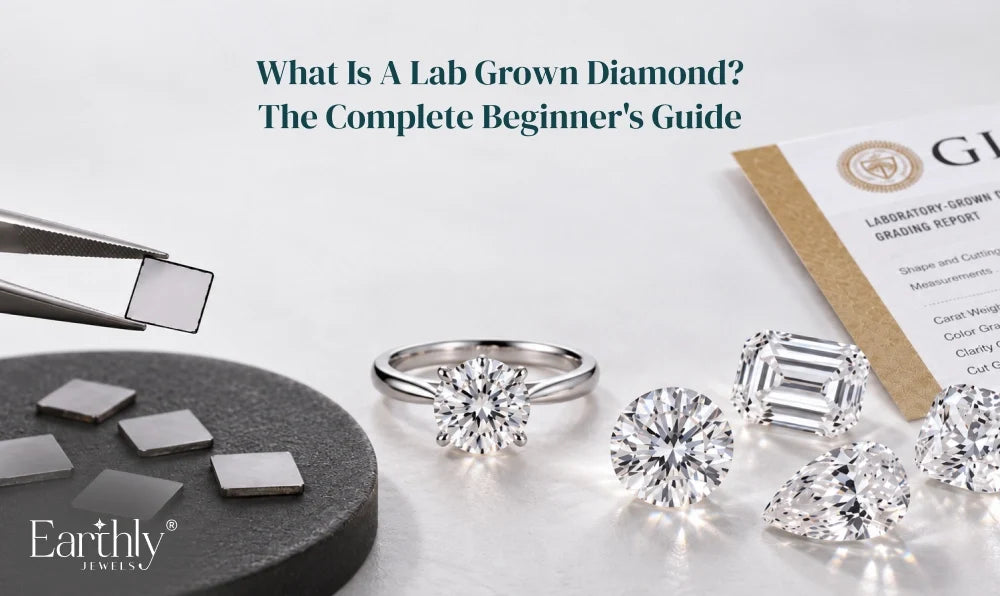
Both types begin with carbon atoms arranged into a crystal lattice. That structure gives a diamond its hardness, heat resistance, and the way light moves through it. Lab grown diamonds have that exact same structure.
Key facts:
- Made from pure carbon, just like mined diamonds
- Achieves a perfect 10 on the Mohs hardness scale
- Produces the same brilliance and fire through an identical refractive index
- Graded by IGI and GIA using identical criteria
- Issued with a full certificate covering cut, colour, clarity, and carat weight
One method replicates underground pressure and temperature. Another deposits carbon layer by layer using chemical vapour. Both produce a genuine diamond crystal. On the finger, the two are indistinguishable.
Why More Women Are Choosing Lab Grown Diamonds
The shift reflects a broader change in how women define value.
- Financial reach: Lab grown diamonds cost significantly less. That gap can mean moving from a one-carat budget to a two-carat purchase.
- Stone quality: Lower prices do not mean lower grades. VS1 and VVS clarity become accessible without stretching the budget.
- Cleaner sourcing: No supply chain concerns linked to mining. For buyers who care where things come from, this matters.
- Design freedom: A lower stone cost frees budget for ring design, metal, and accent stones.
What Women Want Most From A Diamond Ring
A ring gets worn every day. What a woman needs from it goes beyond looks.
- Visible brilliance: Cut quality determines whether a diamond performs in everyday light, not just in jewellery store lighting.
- Comfort: A ring that snags on fabric or sits too high becomes frustrating fast. Band width and prong placement affect daily comfort.
- Stone presence: Lab grown diamonds make a larger stone achievable without inflating the spend.
- Personal style: The ring should feel like an extension of the wearer, not a default choice.
Do Lab Grown Diamond Rings Offer Better Value?
What the buyer receives per rupee spent is what matters.
Comparing Lab Grown and Natural Diamond Rings
| Factor | Lab Grown Diamond | Natural Diamond |
| Price point | Substantially lower for equal specifications | Premium pricing tied to mining and rarity |
| Size per budget | Larger carat weight within reach | Smaller stones dominate mid-range budgets |
| Clarity and colour | Higher grades at lower price | Premium grades reserved for premium spends |
| Certification | IGI and GIA certified | IGI and GIA certified |
| Appearance | Visually identical to natural diamonds | Visually identical to lab grown diamonds |
| Resale value | Lower secondary market demand | Stronger resale market established |
On every daily interaction point, lab grown diamonds perform equally well. The only meaningful gap is resale, which affects very few buyers in practice.
Getting Better Quality Within Budget
A budget that covers a 0.9-carat SI1 natural stone could reach 1.8 carats in VS1 clarity as lab grown.
What this shift unlocks:
- Two-carat stones move within reach
- Higher clarity grades become financially realistic
- More budget goes toward the setting and metal
- Custom designs become practical rather than out of reach
Popular Lab Grown Diamond Ring Styles for Women
The range covers daily minimalism to bold statement pieces.
Classic and Everyday Styles
- Solitaire rings: One diamond, one setting, nothing competing for attention. Round, oval, cushion, emerald, and princess shapes all suit this format.
- Hidden halo rings: Small diamonds wrap below the centre stone. From above it reads as a solitaire. From the side, a ring of light appears and the stone looks larger.
- Side stone rings: Accent diamonds frame the centre stone along the band. The three-stone rings variation is chosen for its symbolic reading of past, present, and future.
- Halo rings: A pave frame surrounds the main diamond. It increases perceived size and adds sparkle intensity.
Romantic and Statement Styles
- Toi et Moi rings: Two diamonds share one setting, side by side or angled. Contrasting shapes like oval and pear or round and marquise create strong visual character.
- Twisted pave rings: Small diamonds along a spiralling band add movement and catch light from multiple angles.
- Split shank rings: The band divides into two strands at the stone. The open frame suits oval and cushion cuts and adds architectural quality.
- Heart shaped rings: A heart-cut diamond in a simple prong setting. The shape speaks for itself.
Designer and Specialty Styles


- Cathedral setting rings: Arched supports lift the stone upward. Adds formality and presence to round and oval diamonds.
- Floral prong rings: Petal-shaped prong tips hold the stone inside a flower-like frame. Oval and pear shapes suit this best.
- V-shaped rings: The band narrows to a point beneath the stone, drawing the eye upward and slimming the finger.
- Signet diamond rings: A diamond at the centre of a low-profile flat band. Works well as a stacking piece.
- Eternity bands: Diamonds run the full band with no gap. Works alone or paired with a centre stone ring.
- Custom lab grown diamond rings: Lower stone costs make custom work practical. Buyers can direct the design from stone selection to setting detail.
Which Diamond Shape Is Best For Women?


Shape changes visual size, light behaviour, and how the ring reads on the finger. There is no single best shape. It depends on personal preference.
Popular Diamond Shapes Compared
| Shape | Sparkle | Finger Coverage | Popularity | Best Style Match |
| Round | Maximum brightness | Moderate | Very high | Solitaire, halo, cathedral |
| Oval | Bright with soft edges | High, elongating | Very high | Solitaire, split shank |
| Pear | Brilliant with a point | High, slimming | High | Solitaire, east-west |
| Cushion | Warm, pillow-like | Moderate | High | Halo, pave band |
| Emerald | Broad reflective flashes | High, rectangular | Moderate | Plain solitaire, thin band |
| Princess | Sharp, intense | Moderate, square | Moderate | Four-prong, bezel |
| Marquise | High brilliance | Very high | Moderate | Six-prong, east-west |
| Heart | Softer brilliance | Moderate | Niche | Simple prong, bezel |
| Radiant | Very intense | Moderate | Moderate | Halo, three-stone |
Key insights:
- Round diamonds redirect the most light upward through precisely angled facets.
- Oval and marquise cover more finger surface per carat and appear larger than round stones.
- Emerald cuts reflect broad light sheets rather than sharp sparkle.
- Cushion and radiant shapes suit buyers who want brilliance with a softer edge.
How To Choose The Right Lab Grown Diamond Ring
Focus On The Essentials
- Cut quality above everything: A poorly cut diamond wastes its carat weight. Insist on Excellent or Ideal cut grades regardless of budget.
- Shape before setting: Choose the diamond shape first. The shape informs which settings work.
- Setting for lifestyle: Women who work with their hands need lower-profile settings. Bezel settings protect the stone. Prong settings allow more light but need occasional checking.
- Metal colour for skin tone: Yellow gold reads warm and traditional. White gold and platinum suit a cooler look. Rose gold suits pear and oval shapes particularly well.
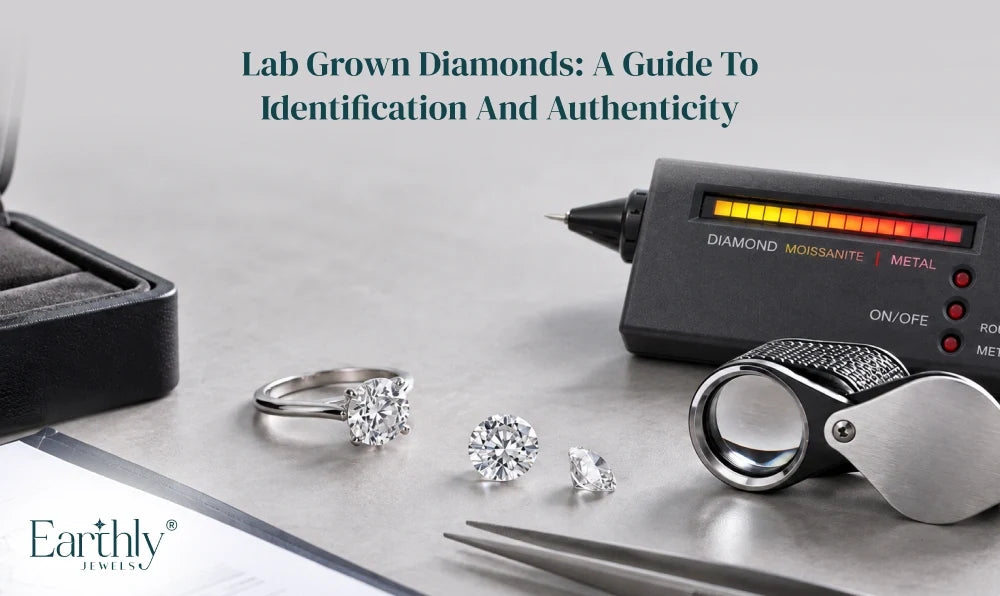
- Always verify certification: A certificate from IGI or GIA confirms everything the seller claims. Without one, there is no reliable way to assess the stone.
Are Lab Grown Diamond Engagement Rings Worth It?
Lab grown diamonds change what is possible within an engagement ring budget.
Why Buyers Choose Lab Grown Engagement Rings
- Genuine size upgrade: A 0.8-carat mined budget now reaches 1.5 to 2 carats in lab grown.
- Clarity as a real priority: Engagement rings get looked at closely. VS and VVS grades become accessible at lab grown prices.
- Room for the setting too: Less spent on the stone means more budget for how it is presented.
- A sourcing story both partners feel good about: No supply chain concerns that require explanation.
Popular Engagement Ring Styles


- Solitaire rings: Clean and timeless. A well-cut stone in a prong setting needs nothing else.
- Hidden halo rings: Extra visual size without an obvious frame. Small stones expand the base beneath the centre diamond.
- Toi et Moi rings: Two stones with personality. Suits couples who want something beyond a conventional single stone.
- Oval engagement rings: Consistently top search rankings. Large perceived size and flattering on most finger types.
- Cathedral settings: Arched supports create a formal, sculptural look. The classic choice over trend-driven designs.
Common Myths About Lab Grown Diamond Rings
Myth 1 : They Are Fake Diamonds
Lab grown diamonds are diamond crystals by every measurable standard. Same carbon structure, same optical behaviour, same hardness. The Federal Trade Commission formally confirms this. Cubic zirconia is a different material entirely and shares no category with them.
Myth 2 : They Do Not Sparkle Like Natural Diamonds
Sparkle comes from how a stone is cut, not where it came from. An Ideal-cut lab grown diamond outperforms a poorly cut natural diamond every time. Cut is the variable. Origin is not.
Myth 3 : They Are Less Durable
Hardness is a crystalline property. The formation process does not affect a diamond's hardness. No physical mechanism causes a lab grown diamond to scratch or cloud faster than a mined one.
Myth 4 : They Are Only A Trend
The market has expanded consistently for over a decade. Grading labs built dedicated infrastructure. Retailers restructured entire categories. This change is becoming a permanent part of the jewellery industry.
Conclusion
Lab grown diamond rings earn their place on genuine merit. The stones are real, the sparkle is real, and the savings are real.
The only area where mined diamonds hold a clear edge is resale value. For a ring bought to be worn and loved, that rarely matters.
Lab grown diamond rings are worth it. Not as a compromise, but as a considered choice that delivers everything a fine diamond ring should.
Key Takeaways
- Value: Real upgrades in size, quality, or design without increasing spend.
- Beauty: Sparkle and appearance are determined by cut, not origin.
- Styles: Every major ring style is available with lab grown diamonds.
- Durability: Same hardness as natural diamonds. Built for daily wear.
- Certification: IGI and GIA certify lab grown stones to the same standards as mined diamonds.
- Versatility: Suits, engagement rings, fashion rings, eternity bands, and custom designs.
- Market direction: Buyer adoption rises year on year. This is not a temporary preference.
- Buying confidence: A certified stone from a reputable source leaves nothing in doubt.
Frequently Asked Questions
Are Lab Grown Diamond Rings worth buying for everyday wear?
Yes. Lab grown diamonds offer the same scratch resistance as mined diamonds. A well-crafted prong or bezel setting provides added protection for daily wear.
Which Lab Grown Diamond Ring design never goes out of style?
The round brilliant solitaire. Its geometry maximises light performance and puts full focus on the stone. No trend has displaced it.
Does a hidden halo create the illusion of a bigger diamond?
They do. Small diamonds beneath the centre stone add width to the base and make the face appear larger. The effect is subtler than a full halo but cleaner from above.
Are Toi et Moi rings a passing trend or a timeless design?
The format is centuries old and has never fully left the market. Current popularity is a revival, not an invention. Its emotional connection gives it a timeless quality that trends rarely achieve.
Which diamond shape gives the most finger coverage?
Marquise covers the most finger length per carat. Oval is the second strongest and considerably more popular.
How can certification help me buy with confidence?
A certificate from IGI or GIA comes from a third party with no stake in the sale. It records cut, colour, clarity, and carat weight and lets buyers verify the stone independently.
What should I avoid when buying a Lab Grown Diamond Ring?
Avoid buying a Lab Grown Diamond Ring without an IGI or GIA certificate. Do not focus only on carat weight while overlooking cut, colour, and clarity. Be cautious of prices that seem unusually low, and always inspect the ring setting and certification details before making a purchase.

Share:
How To Choose The Best Lab Grown Diamond Ring In India
What Makes Earthly Jewels Different From Other Jewellery Brands